
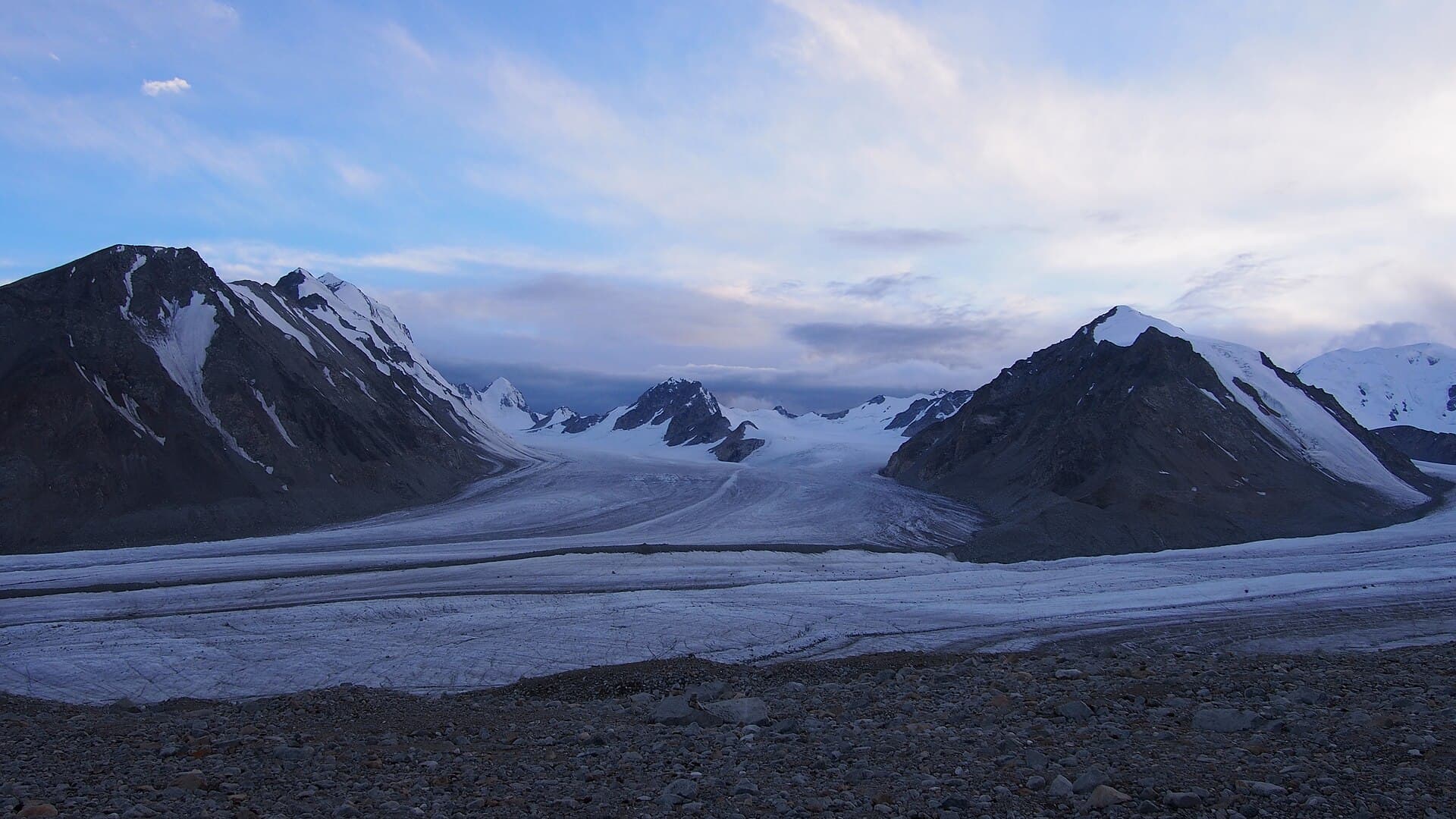
Quick answer: how do you plan an Altai trek in Mongolia?
An Altai trek in Mongolia almost always takes place in Altai Tavan Bogd National Park, in the far west, with a licensed agency that arranges the park permit and the border-zone permit. Two formats dominate: walking to Khüiten base camp at the foot of the Potanin Glacier, and a multi-day route between Khoton and Khurgan lakes with pack horses or camels. The season runs from mid-June to early September. Allow a day of flying and driving from Ulaanbaatar via Ölgii before you start walking, then 4 to 8 trekking days depending on the format.
| At a glance | |
|---|---|
| Where | Altai Tavan Bogd National Park, Bayan-Ölgii province |
| Base | Ölgii (flight from Ulaanbaatar), then 4×4 |
| Formats | Khüiten base camp; lakes trek |
| Season | Mid-June to early September |
| Required | Park and border-zone permits, through a licensed agency |
| Watch out for | Snow possible all summer, river crossings, total remoteness |
This article complements our pages on hiking in Mongolia and the Altai.
Base camp or lakes: which Altai trek should you choose?
| Format | What you see | Level | Logistics |
|---|---|---|---|
| Khüiten base camp | Potanin Glacier, the Five Saints (Tavan Bogd) peaks | Long approach, altitude around 3,000 m | Camels or horses for luggage, tent camp |
| Lakes trek | Khoton and Khurgan lakes, pastures, Kazakh families | Steady stages, river fords | Pack horses, tent nights, supplies arranged by the agency |
| Combination | Both | The most demanding | 10 days or more on the ground |
Khüiten (4,374 m), Mongolia’s highest peak, is not a hiking objective: climbing it involves a crevassed glacier, rope, crampons and mountaineering experience. Base camp, however, is within reach of fit hikers.
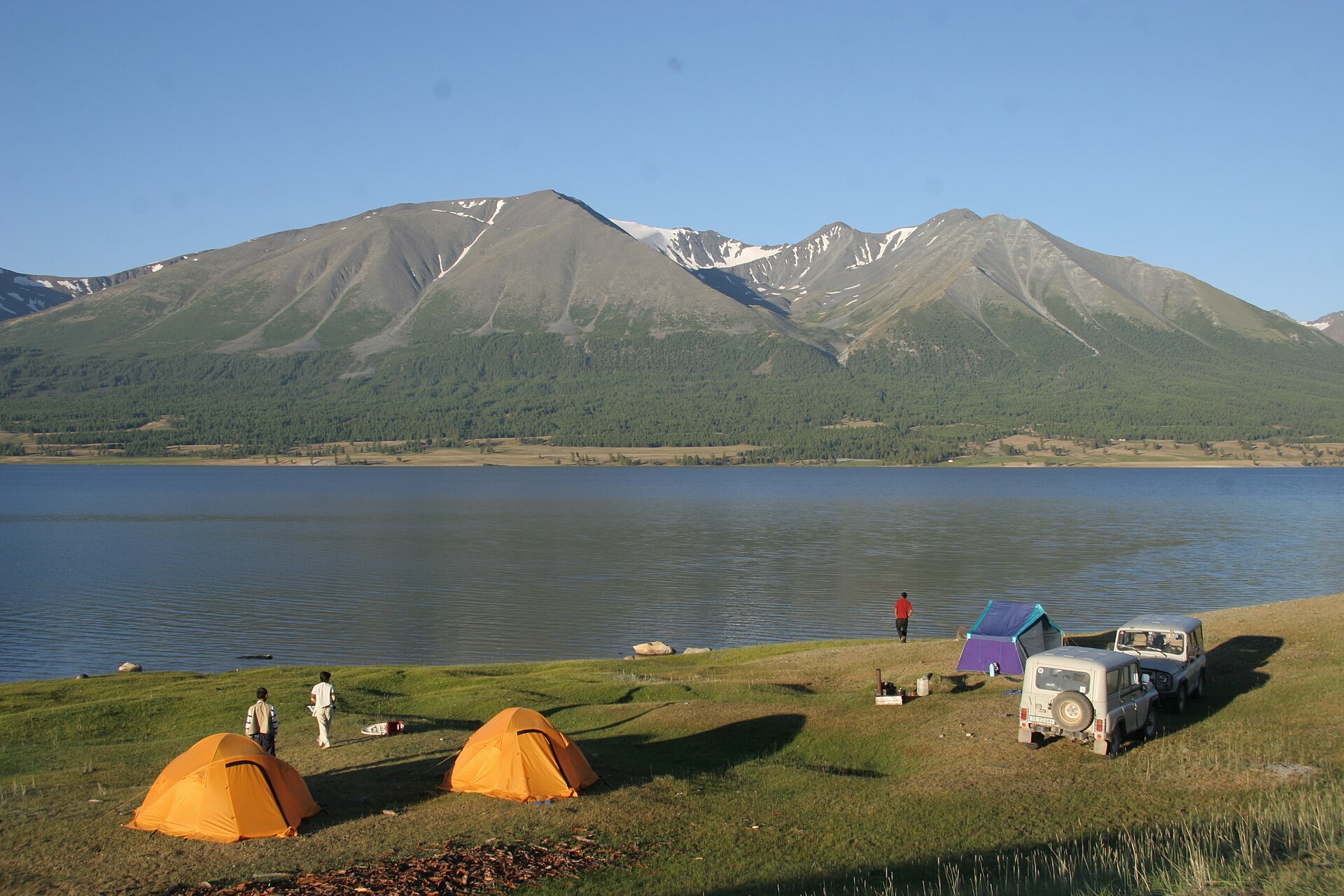
Camp inside Altai Tavan Bogd National Park — Photo: Altaihunters · CC BY-SA 3.0.
The trek to Khüiten base camp
The approach starts at the park ranger post at the end of the track, then follows a glacial valley to base camp, set near the Potanin Glacier, the largest in Mongolia. Local operators give an approach of about 15 to 18 km and a base camp at around 3,200 m. Luggage goes up by camel or horse.
Plan at least one full day at base camp: it helps acclimatisation and lets you walk to viewpoints over the glacier. Do not step onto the ice without a mountain guide and equipment: crevasses are often hidden under snow.
The Khoton and Khurgan lakes trek
South of the massif, Khoton and Khurgan lakes stretch along wide valleys where Kazakh families set up summer camps. The route between the two lakes follows tracks and pasture paths without waymarks. The terrain is gentler than at base camp, but distances and fords require stamina.
This format suits hikers who prefer open landscapes and meeting herders over the glacier. It also takes in the region’s rock art: the Petroglyphic Complexes of the Mongolian Altai are a UNESCO World Heritage Site.
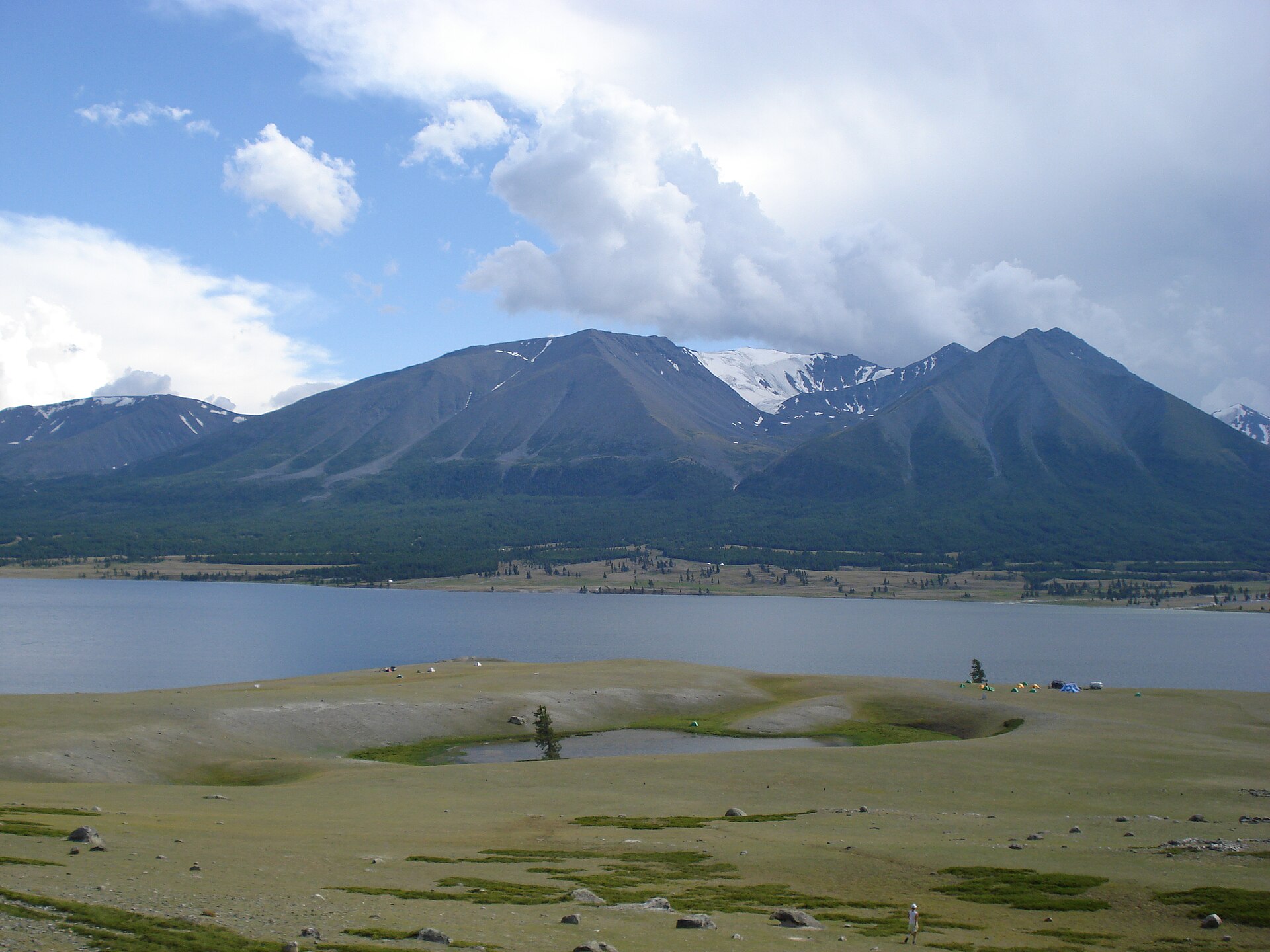
Khoton Lake in Altai Tavan Bogd National Park — Photo: Mongolia Expeditions · CC BY 3.0.
Permits: why go through a licensed agency?
Altai Tavan Bogd lies where the borders of Mongolia, China and Russia meet, so two authorisations are needed: the national park permit and a border-zone permit. According to local operators, the border permit is issued through a licensed Mongolian agency, and independent hikers cannot arrange access alone.
Apply several weeks before departure and carry your passport throughout the trek, as rangers may check it. Confirm the year’s procedure with your agency, as it can change.
Getting to the Altai from Ulaanbaatar
- Domestic flight: Ulaanbaatar to Ölgii, about 3 hours according to operators; check flight days, which are few.
- Track: about 200 km from Ölgii to the park, or 5 to 6 hours by 4×4 depending on conditions.
- Buffer: plan a spare day at the end; domestic flights are sometimes delayed or cancelled.
Driving from Ulaanbaatar is possible but takes several days. It only makes sense for a long trip that includes crossing the country.
When to go on an Altai trek
The usual window runs from mid-June to mid-August for base camp, with a margin to early September for the lakes. In June, snow may still cover the passes. July and August are the mildest months, but also the time of storms that swell rivers.
Snow can fall at any time in the Altai. Keep a spare day in the plan to wait for better weather or avoid a ford that is too high.
Gear and life in the field
- Waterproof hiking boots and sandals for fords.
- Down jacket, hat, gloves and windproof: temperature swings are large.
- Sleeping bag with a comfort rating around -5 °C or lower.
- Water filter or tablets, strong sun protection and sunglasses.
- A full first-aid kit: the nearest hospital is far away and phone coverage is almost nil.
With Kazakh families, accept the tea you are offered, ask before taking photos and follow your guide’s advice on customs. Carry all your rubbish back to Ölgii.
Budget: what drives the price
The price of an Altai trek depends mainly on the number of days, group size and what the agency includes: domestic flight, 4×4 and driver, permits, guide, cook, pack animals, tents and meals. A group of two pays much more per person than a group of six, because the vehicle and crew cost the same. Ask for an itemised quote.
Frequently asked questions about the Altai trek
Can you do an Altai trek without an agency?
In practice, not in Altai Tavan Bogd: the border-zone permit goes through a licensed Mongolian agency.
Do you need to be a mountaineer to reach base camp?
No. Base camp is accessible to fit hikers. Only climbing Khüiten and walking on the glacier are mountaineering.
How many days do you need?
Allow at least 8 to 10 days on the ground, including travel, for a 4 to 6 day trek. Combining base camp and lakes takes longer.
What is the best time to go?
Mid-June to mid-August for base camp; until early September for the lakes.
Can you meet Kazakh eagle hunters?
Kazakh families in the region practise hunting with eagles. Your agency can arrange a visit that respects the families.
Sources
Checked on 10 October 2026: UNESCO, Petroglyphic Complexes of the Mongolian Altai; Wikivoyage, Altai Tavan Bogd National Park; Discover Altai, local operator, permit and access information.