
Quick answer
Choose a hiking region in Portugal by the ground you want to walk on: northern hills and villages, southwestern coastal paths, or an island stay in Madeira or the Azores. Then select a specific route that matches your experience and the conditions. None of these areas has a single difficulty level.
Our Portugal destination guide introduces the regions. This article helps you choose a base before committing to particular walks.
Compare the regions before booking
| Region | Walking plan | What to check |
|---|---|---|
| Peneda-Gerês | Hills, villages and day walks | Elevation, access and local weather |
| Alentejo and Algarve coast | Coastal outings or stages | Sand, exposure and return transport |
| Madeira | Exploring an island on foot | Access, reservations and exposed sections |
| Azores | Island scenery and walking | Island choice, visibility and transfers |
Northern Portugal: start with a base and build gradually
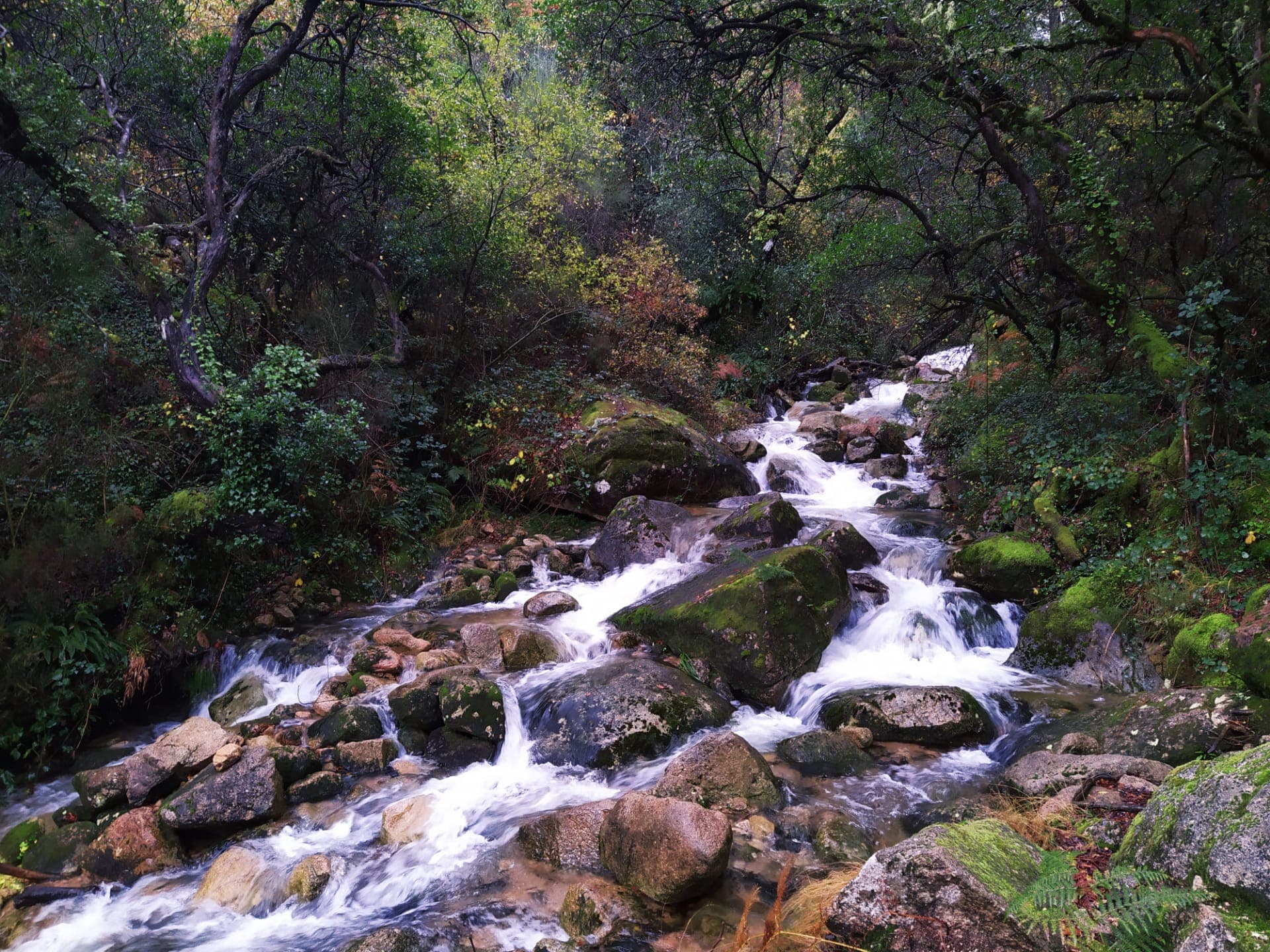
Consider Peneda-Gerês if mountain landscapes appeal to you. For a first stay, find two or three trailheads reachable from one accommodation. A short first outing lets you check your pace before attempting a longer day.
Compare elevation and surfaces as carefully as distance. A modest mileage can take time on uneven ground. Include the drive to the trailhead in your planning: long journeys leave fewer hours for walking, eating and resting.
The southwest: choose a loop or a walking stage
Rota Vicentina offers several walking formats in southwestern Portugal. A loop simplifies the return to your accommodation, while a linear stage needs transport or a different overnight stop. Check the official walking routes before choosing the format.
Being near the ocean does not guarantee cool conditions or an easy day. Sand and exposure can slow progress. Plan water, breaks and a legitimate way to shorten the outing instead of inventing a shortcut along a cliff.
Madeira and the Azores: give an island enough time
In Madeira, choose your walks before filling every day with bookings. Check Visit Madeira and IFCN information for access and applicable arrangements. A route described as a levada walk is not automatically easy or suitable for someone uncomfortable with heights.
For the Azores, start with the island rather than a long list of walks across the archipelago. A short trip often works better with one base and fewer transfers. Keep an alternative that depends less on visibility, so one poor-weather day does not undermine the whole visit.
When should you go?
There is no single best month for every Portuguese hike. Compare weather at the destination, altitude, exposure and your comfort in heat or rain. A forecast for Lisbon does not describe a mountain walk in the north or an island trail.
Keep a flexible day during a stay of several nights. If conditions change, a shorter outing near your accommodation can replace a more ambitious hike. A booking should not become a reason to continue with an unsuitable plan.
Arrange three walking days
Use this as a flexible structure rather than a marked itinerary: a short orientation walk on day one, your main hike on day two, then an easier loop or reserve day. Check each selected route separately.
For a crossing, add overnight stops, food and any luggage transfers. With a fixed base, check daily access instead. In either case, calculate accommodation, transport, meals and any services together. Do not assume that access arrangements are identical across all regions.
Frequently asked questions
Where should a beginner start?
Choose a clearly documented short loop with an accessible trailhead and a straightforward return. The actual terrain and your recent experience matter more than a region’s reputation.
Do you need to hire a car?
That depends on your chosen walks. Check transport to the trailhead and back, rather than only the journey to your accommodation. A linear stage may need a different arrangement from a loop.
Can you combine mainland Portugal and the islands on a short trip?
You can, but transfers reduce walking time. For a few days, one carefully chosen region generally makes it easier to keep the programme flexible.