
Quick answer: how do you prepare a Rinjani trek?
A Rinjani trek requires a licensed guide and a booking on the official eRinjani platform, outside the park’s annual closure from 1 January to 31 March. The 3,726 m summit is climbed from the village of Sembalun, in eastern Lombok. Allow two days to reach the crater rim and the summit, or three to four to also descend to Lake Segara Anak and exit by another side. The final night climb on loose scree is the hardest part. Note: since 1 September 2026, the park has stopped taking new eRinjani bookings because of fire risk; only bookings paid before that date are honoured. Check that bookings have resumed before planning your trek.
| At a glance | |
|---|---|
| Where | Gunung Rinjani National Park, Lombok (Indonesia) |
| Trailheads | Sembalun (summit), Senaru, Torean |
| Length | 2 days (crater rim and summit) to 4 days (traverse) |
| Season | April to December, depending on park opening |
| Required | eRinjani ticket, licensed guide |
| Watch out for | Steep final climb, cold nights, sudden closures |
This guide complements our pages on hiking in Indonesia and Lombok.
Which route should you choose for the Rinjani trek?
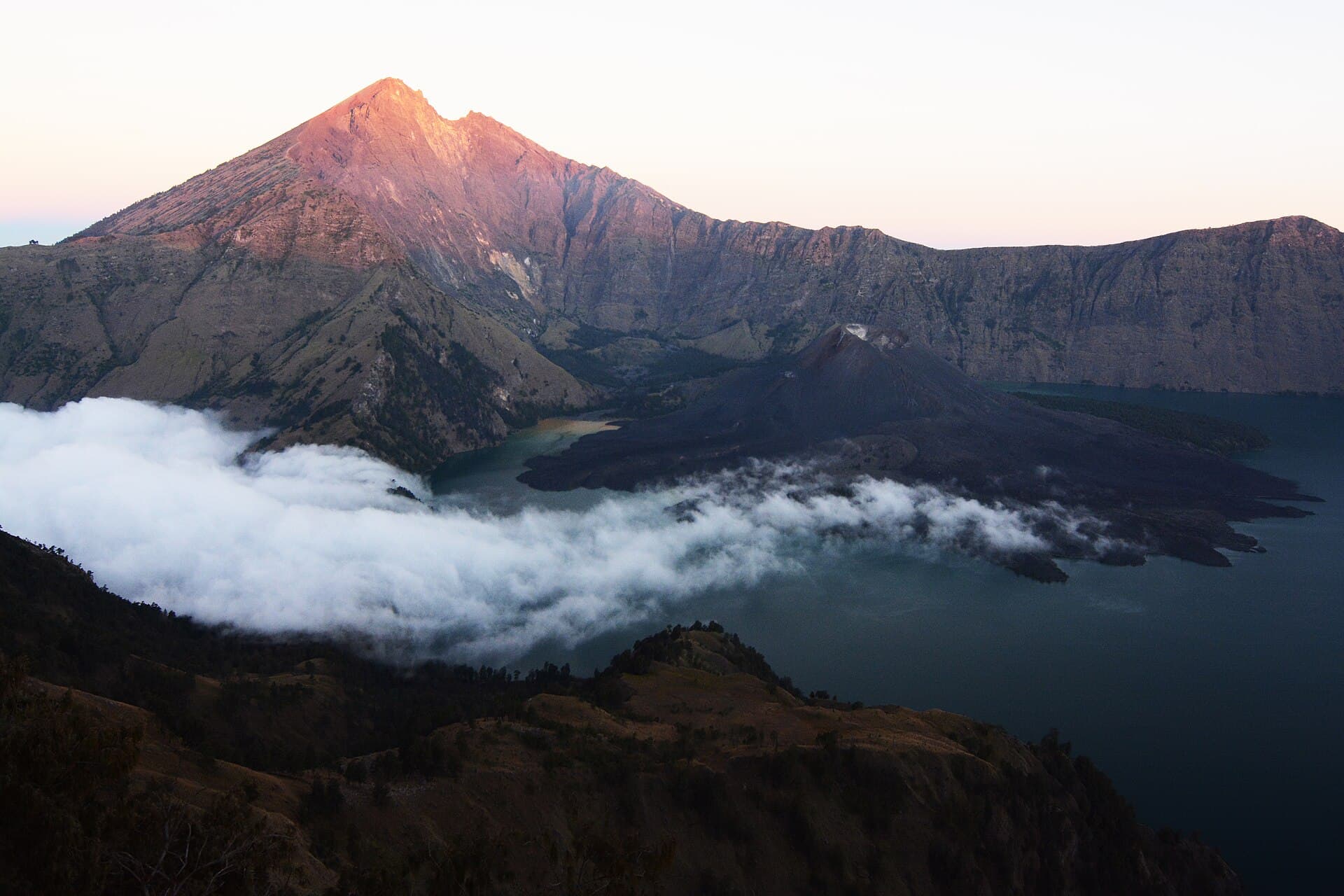
Rinjani is a volcano whose crater, several kilometres wide, holds Lake Segara Anak and a young active cone, Gunung Baru (or Barujari). Routes differ by starting point and by what they let you reach.
| Route | Highlight | What to know |
|---|---|---|
| Sembalun | Only direct summit access | Sun-exposed savanna, then a steep climb to Plawangan Sembalun camp |
| Senaru | Rainforest, lake views | Reaches the summit only by crossing the crater to the Sembalun side |
| Torean | Gorges and hot springs | Often used as a descent from the lake |
| Timbanuh, Tetebatu, Aik Berik | Quieter | Open in some years; confirm with the park |
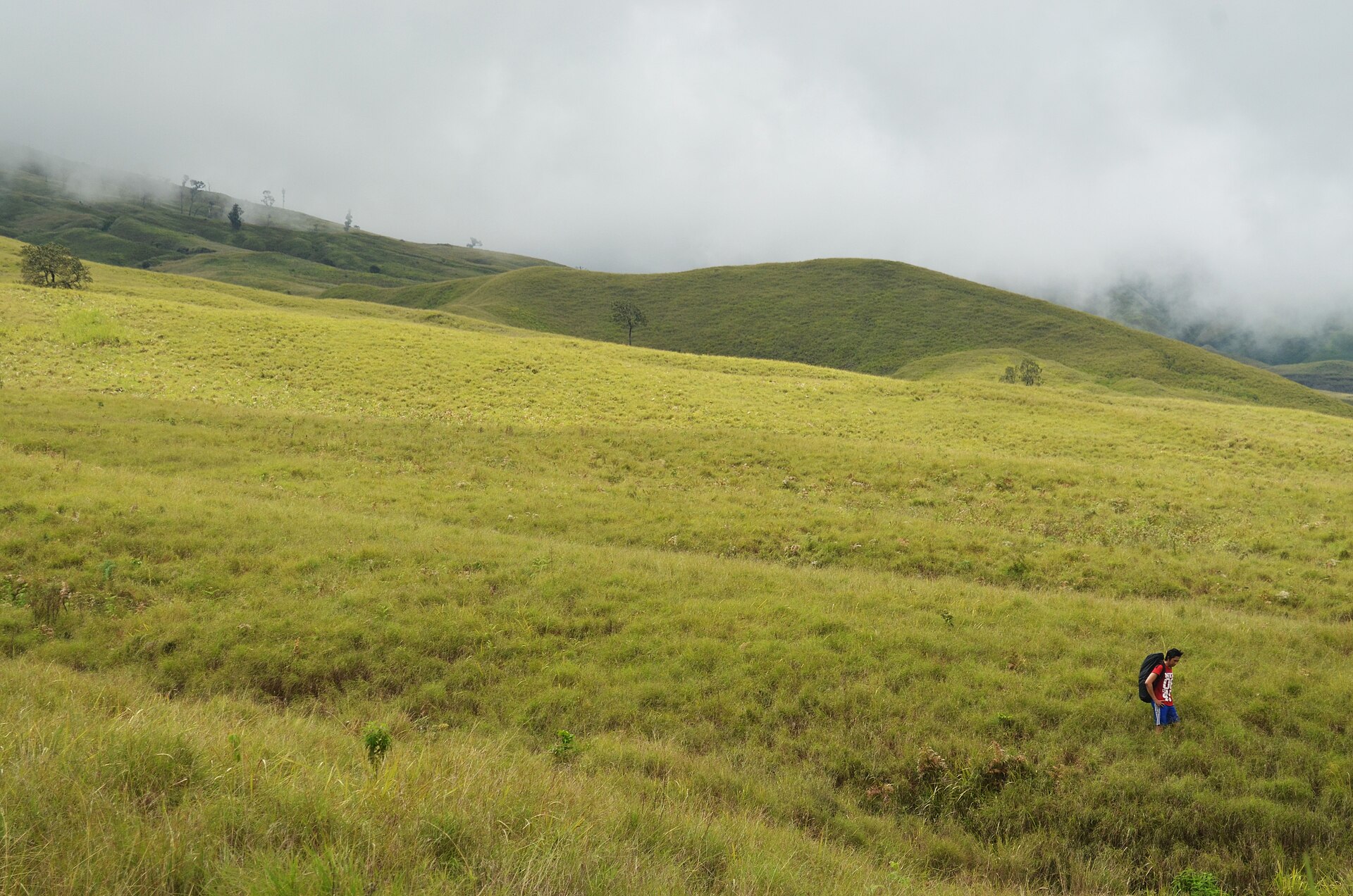
Savanna near the first post on the Sembalun route — Photo: Chafidwahyu · CC BY-SA 4.0.
How many days do you need?
The shortest programme climbs from Sembalun to the crater-rim camp in one day, then summits at night before descending on day two. It is very physical: a big climb on day one, a wake-up around 2 or 3 a.m., then a long descent.
A three-day programme adds the descent to Lake Segara Anak, a night by the water, then an exit via Senaru or Torean. Four days leave margin for weather and spread the effort. Choose according to your fitness, not the shortest option on offer.
How to book: eRinjani, guides and park rules
Entry to Gunung Rinjani National Park is booked online through the official eRinjani platform, with a named ticket. Foreign hikers must be accompanied by a licensed guide; porters usually carry tents, food and water.
Rules change from season to season: hikers per guide, insurance, medical certificates and tracking apps have all been adjusted in recent years. Several operators report that trekking insurance has been required since 2026. Check the current list on eRinjani and ask your agency what is included.
When should you do the Rinjani trek?
The park closes its trails every year during the rainy season. In 2026, the park office closed all routes from 1 January to 31 March, citing slippery trails, fog, flooding and hypothermia risk.
The dry season, roughly May to September, usually brings the clearest skies. It has its own closures: late in the dry season, forest fires can shut some routes. On 1 September 2026, the park office restricted access to Rinjani and suspended new eRinjani bookings until the fire risk is judged under control. At the end of September, local operators also reported Senaru and Torean closed, with treks running via Sembalun. Check the park’s official announcements before you go.
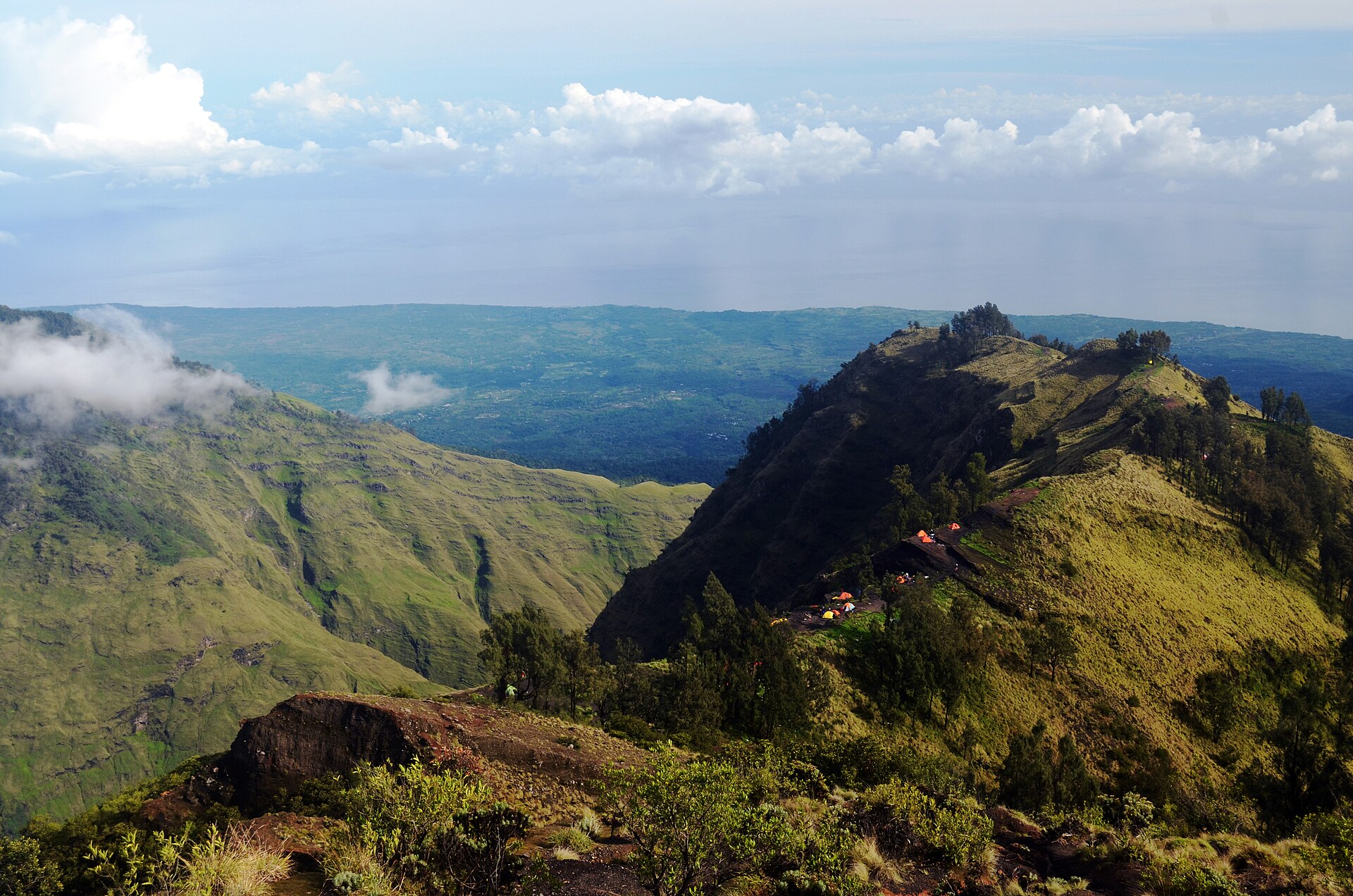
Plawangan Sembalun camp on the crater rim — Photo: Chafidwahyu · CC BY-SA 4.0.
The summit climb: what to expect
The final ascent leaves Plawangan Sembalun camp in the middle of the night to reach the top at sunrise. The slope is steep and covered in scree: with every step, your foot slides back. Wind and cold are often strong near the summit.
Agree a turnaround time with your guide and stick to it. Turning back before the summit is not a failure: descending on scree is tiring and falls are common. Serious accidents have happened near the summit, including in recent years, so stay close to your guide and on the route.
Gear for the Rinjani trek
- High-top hiking boots with good grip, and gaiters against scree.
- Warm jacket, windproof, hat and gloves: it can be close to 0 °C at the summit before dawn.
- Headlamp with spare batteries, trekking poles.
- Sun protection: the Sembalun savanna is very exposed.
- A cold-rated sleeping bag if the agency’s one does not suit you.
Carry out your rubbish. Keeping the crater clean is a major issue for the park, and some agencies run treks that include litter collection.
Frequently asked questions about the Rinjani trek
Can you do the Rinjani trek without a guide?
Not as a foreign hiker: a licensed guide is mandatory, and booking is done on eRinjani.
Is the Rinjani trek hard?
Yes. Big climbs, a cold night and the final scree ascent make it a demanding trek for fit hikers only.
When is the park closed?
Every year during the rainy season; in 2026, from 1 January to 31 March. Short-notice closures can also follow fires, weather or volcanic activity.
Do I have to go to the summit?
No. A two-day trek to the crater rim, from Senaru or Sembalun, already gives you the view over the lake and the Gunung Baru cone.
How long is the summit climb?
Several hours from the crater-rim camp, depending on your pace and conditions. Your guide sets the start time to arrive at sunrise.
Sources
Checked on 10 October 2026: Antara, Rinjani trails closed in early 2026; Tempo, trails reopening in 2026; Metro TV News, limited opening and eRinjani booking suspension from 1 September 2026. Park announcements are published by Balai TNGR, including on its Instagram account @btn_gn_rinjani.