
To plan your trip, also read Alps: which hiking trails should you choose? and Alps: a hiking guide to planning your trip.
Quick answer
For summer hiking at higher elevations in the Alps, July, August and early September are generally the first periods to consider. Valley walks and lower routes may also suit spring or autumn. The right dates depend on your itinerary: lingering snow, aspect, weather and hut openings matter more than the month. In winter, choose an activity and route specifically suited to snowy conditions.
This calendar is planning guidance, not a forecast for an individual trail. The Alps span several countries and very different landscapes. A village walk and a multi-pass trek do not share the same season.
Match the season to your walking plans
| Your plan | Period to consider first | Essential check |
|---|---|---|
| Valley walk | Spring, summer or autumn, depending on location | Trail condition, weather and access |
| High mountain lake | Summer, sometimes early autumn | Snow on the approach and lake conditions |
| Trek crossing several passes | Midsummer or early September | Every pass and hut availability |
| First family hike | When a straightforward route is confirmed usable | Terrain, duration and return options |
| Autumn outing | According to local conditions | Ice, fresh snow and daylight |
| Winter walk | Operating season of the chosen winter route | Local information and snow conditions |
Tip: decide what kind of walk you want first. Then choose suitable dates and a valley, rather than forcing a high route into an unsuitable season.
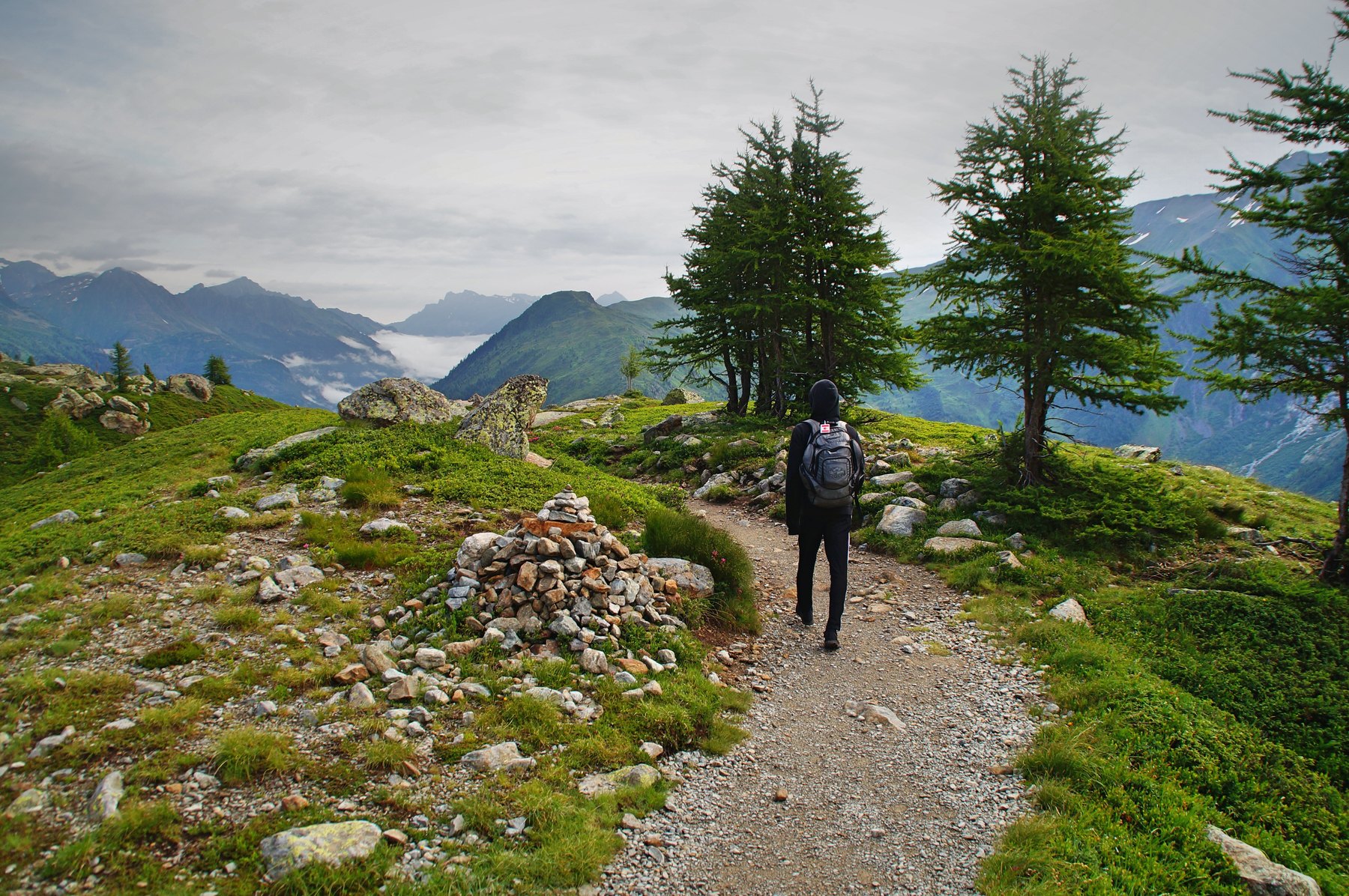
Lac Blanc facing the Mont Blanc massif — Nicolas Cool · CC0, license.
.jpg)
Spring: look lower and keep plans flexible
Spring may suit valley walks and some slopes already clear of snow. It does not signal the opening of every Alpine trail. A route with a dry starting point can still encounter snow farther up.
For an April or May trip, choose a base with several shorter outings and ask which ones are currently usable. Sunny slopes may lose snow sooner, but that does not establish conditions along the entire walk.
A spring holiday works best with room to change your plans. Include village visits or rest days rather than making every day depend on a fixed mountain objective.
June: check the passes before booking a trek
June can be tempting for higher trails, yet conditions may remain difficult. La Chamoniarde notes that snowy passes can complicate the Tour du Mont-Blanc until late June or early July (official trail information). This concerns that itinerary, not a universal opening date across the Alps.
Check every stage before an early-summer departure and seek recent local advice. An open hut does not establish that the next pass is suitable for your experience.
Tip: if you want snow-free hiking, prepare a lower alternative. Buying technical equipment is no substitute for knowing how to assess and cross snowy terrain.
July and August: a useful starting point for many plans
For a first trip focused on mountain lakes and passes, midsummer often provides more options to investigate. It remains conditional: trails can still be snowy, damaged or closed.
Official Écrins route pages describe trails as generally usable from mid-June to late September, with changes caused by snow, damage and weather. This regional guidance still needs a specific trail-condition check.
Longer days provide extra time, but forecasts remain important. Thunderstorms are a real hazard, particularly on high ground. Météo-France explains that they can combine lightning, intense rain, hail and strong gusts. An early start may help organise your day; it does not guarantee avoiding a storm.
For a hut-to-hut journey, confirm accommodation before finalising transport. Keep a flexible day if your schedule allows it.
September: consider it while checking available services
Early September is worth comparing with July and August for a summer-style hiking trip. Whether walking is appropriate still depends on location and recent conditions.
As the month progresses, pay closer attention to huts, lifts and shuttle services. The valley may remain accessible while a service your route relies on has finished its season.
Carry a warm layer and adjust your stages to daylight. Travelling outside school holidays does not guarantee empty paths: popularity and local events vary.
October and November: let the terrain guide the plan
Autumn can offer rewarding walks, but fresh snow, ice and shorter days make higher routes less predictable. A short walk confirmed usable may be more appropriate than a long crossing dependent on closed services.
La Chamoniarde describes Chamonix Valley’s higher lakes as generally thawed between late June and late October, while noting that some remain snowy in June or even July. A thawed lake does not establish a safe approach or an open hut.
Tip: base autumn decisions on recent information about the whole trail. A lake photograph or the village forecast is not enough.
Winter: plan a separate activity
Snowshoes do not automatically turn a summer trail into a suitable winter outing. Choose a route intended for your activity, check local conditions and use qualified support when needed.
SwitzerlandMobility distinguishes summer routes intended for snow- and ice-free conditions from winter activities. Apply that principle throughout the Alps: use information matching the actual season and terrain.
How to choose your travel dates
- Define the outing: valley, lake, pass or trek.
- Choose an area and identify the route’s highest sections.
- Check accommodation and transport operating seasons.
- Ask when the route normally suits your experience.
- Retain booking flexibility where possible.
- Check conditions shortly before travel and each morning.
FAQ
What is the best month for a first Alpine hike?
For a higher summer route, July or August are often the first months to compare. Valley beginners may find suitable walks in other seasons when conditions are confirmed.
Can I hike in the Alps in May?
Yes, on routes suited to the conditions, often lower down. Do not assume high passes or lakes are accessible without snow.
Is September always better than August?
No. Compare weather, operating services and your itinerary. No month is best everywhere.
Will mountain lakes be snow-free in June?
It depends on the lake and year. Seek recent information rather than relying only on usual seasonal dates.
Is a sunny forecast enough to go?
No. Trail conditions, closures and the group’s abilities also matter.