
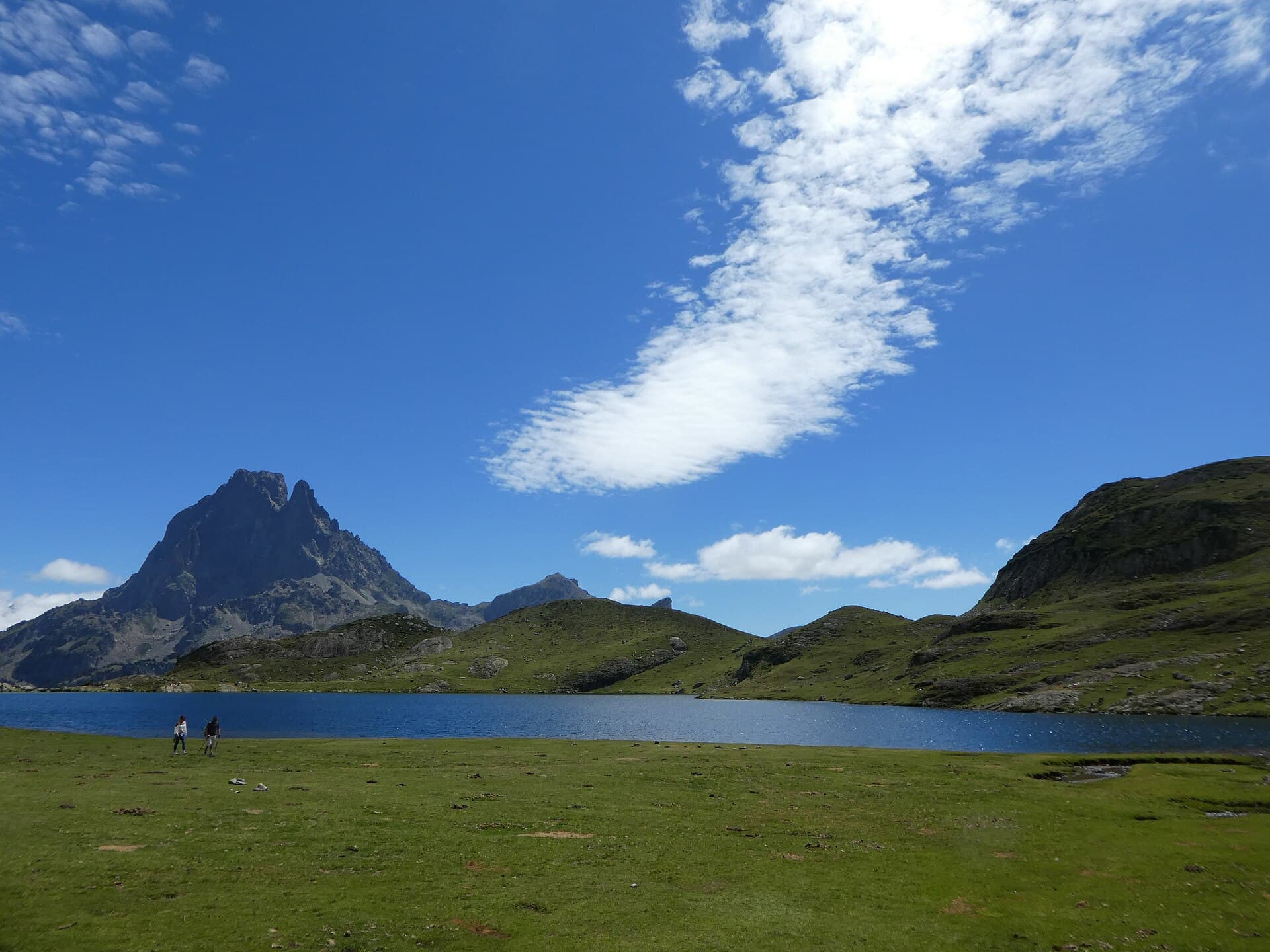
To plan your trip, also read Pyrenees: which hiking trails should you choose?.
Quick answer: how do you organise a hiking trip in the Pyrenees?
Choose a valley as your base, select routes matching the group’s experience and check their conditions before departure. For a trek, confirm every stage and mountain hut. Summer and early autumn are periods to investigate for many higher routes, without any guarantee of snow-free ground. Keep a flexible day, carry protection against cold and rain, and plan access to the trailheads.
Across France, Spain and Andorra, the Pyrenees offer very different holidays. You can walk from a village each day, visit a lake or spend several nights moving between huts. Start by deciding whether you want flexible day hikes or a continuous journey on foot.
Which area should you choose?
Avoid trying to cover the whole range in a few days. One valley often gives enough choice for a first visit. These areas are starting points for research, not promises of easy terrain.
| Area | Country | Type of trip to investigate | What to check |
|---|---|---|---|
| Cauterets and Marcadau Valley | France | Day walks, valley and lake scenery | Exact start and physical effort |
| Gavarnie and surroundings | France | Cirque scenery and longer walks | Difference between lower walks and high routes |
| Ossau Valley | France | Pastures, lakes and varied routes | Terrain and remaining snow |
| Néouvielle | France | Lake-focused holiday | Road access and reserve rules |
| Ariège | France | Hiking from a valley base | Trailhead travel and difficulty |
| Ordesa, around Torla | Spain | Valley scenery and waterfalls | Access arrangements for your dates |
| Aigüestortes, Espot or Boí sectors | Spain | Lakes and mountain walks | Access side and accommodation |
| Andorra | Andorra | Valley stay with day hikes | Actual difficulty of each trail |
Ordesa includes routes associated with the Arazas Valley and its waterfalls [1]. Aigüestortes is known for its many lakes and high-mountain landscape [2]. Those features help you compare areas; they do not make every path suitable for beginners.
Tip: pick a base with a short outing, a main hike and an alternative. This makes changes easier without moving accommodation.
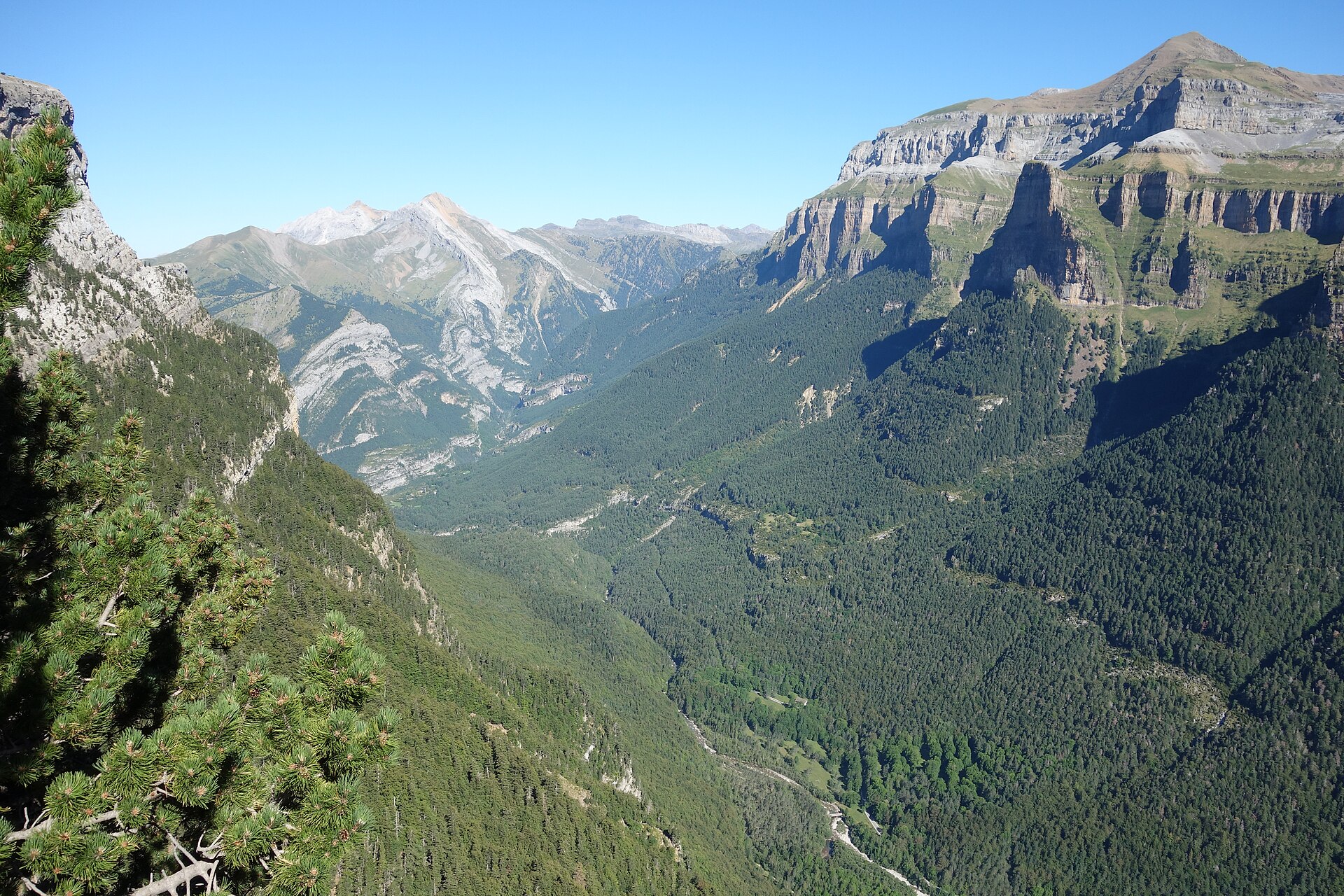
The Ordesa Valley seen from the Mirador de Calcilarruego — Photo: Martin Stiburek · CC BY-SA 4.0.

When should you go?
For higher lakes and mountain passes, July, August and early September are often the first dates to investigate. Treat this as planning guidance rather than a trail-opening calendar. Snowy years and changes in weather can alter your options.
In spring, look for lower routes confirmed suitable. An open road and a clear trailhead do not establish that the upper section is snow-free. In autumn, check ice, fresh snow, transport schedules and hut closures.
Winter requires a different plan. Choose a route suitable for winter conditions and your skills rather than automatically following a summer track.
Tip: if dates are fixed, adapt the altitude and programme. If the objective is fixed, retain flexibility in your dates where possible.
How should you select walks?
Compare distance, total ascent and descent, walking time and terrain. Include exposed sections, opportunities to turn back and access constraints. The French Pyrenees National Park recommends studying the itinerary, consulting maps and using suitable equipment [3].
A photograph or an easy label should not make the decision alone. A short route can be steep, and a long descent may feel harder after climbing.
For a first trip, choose a marked trail without difficulties beyond your experience, with a duration below your usual maximum. With children, account for experience, pace and breaks rather than age alone.
Use park and tourist-office route information as a starting point. Aigüestortes information centres provide leaflets outlining recommended routes and their difficulty [4].
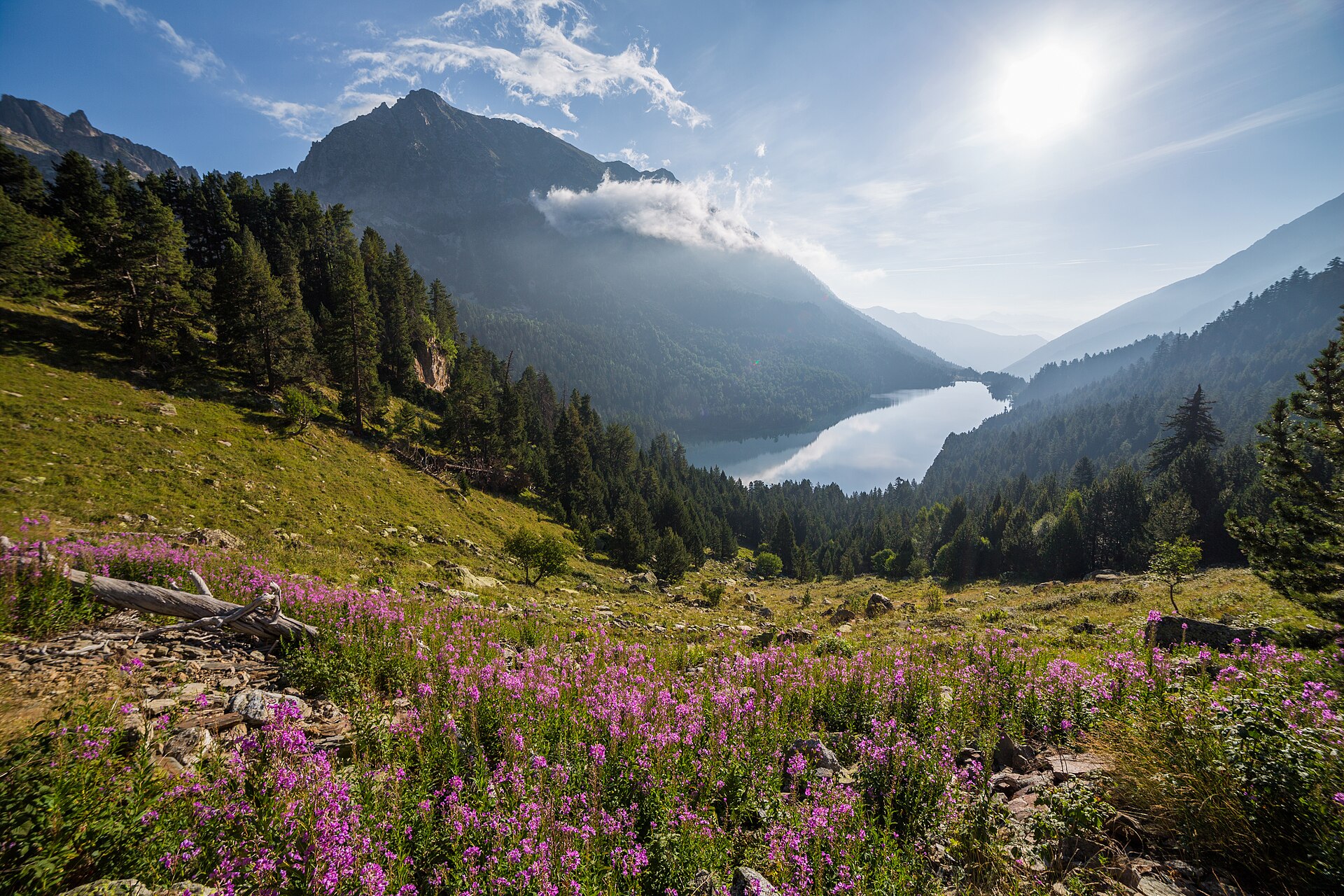
Sant Maurici lake in Aigüestortes National Park — Photo: Diliff · CC BY-SA 3.0.
Stay in one valley or trek between huts?
A fixed base
A hotel, guesthouse or rental lets you carry a daypack and change plans more easily. It works well for a first trip or a group with different preferences. Check driving times: neighbouring valleys can require a substantial detour.
A hut-to-hut journey
Trekking requires connected stages, a heavier pack and an early-exit plan. Reserve accommodation and confirm meals, water, staffed dates, payment arrangements and required equipment.
The GR10, GR11 and Haute Route Pyrénéenne represent different projects. Do not treat them as interchangeable versions of a casual walk. A short, suitable section can make a better first trek than a long traverse.
What should you pack?
Match equipment to the terrain and level of independence required:
- Suitable footwear tested on a previous walk.
- Rain protection, a warm layer and sun protection.
- Water and food without assuming supplies will be available.
- An offline map and navigation tools you know how to use.
- Charged phone, head torch and a power bank when needed.
- First-aid kit, emergency blanket and personal medication.
- Dry clothes and the hut’s requested items for overnight stays.
Snow equipment only helps when you have the skills to use it and assess the crossing. If conditions exceed your experience, change route or use a suitably qualified professional.
Transport, budgeting and bookings
Plan the final journey to the trailhead. Check shuttles, road restrictions, parking and return times for your dates. For a traverse, work out how you will recover your vehicle or reach onward transport.
Budget for travel, accommodation, food, access services, equipment and guiding. Compare options with the same inclusions. Keep a reserve for an extra night or transfer, and check the insurance cover applicable to your activity.
A single price for the whole range would be misleading: country, comfort and duration make a substantial difference.
Bivouacs and protected areas
Rules vary by location. The French Pyrenees National Park distinguishes camping from overnight bivouacs. Its official page limits bivouacs in Néouvielle to designated areas at Orédon and Aubert lakes, between 7 pm and 9 am [5]. Check the current rules at your exact location; do not apply French rules to Spain or Andorra.
Check restrictions on dogs, fires and movement within protected areas too [6]. Carry out litter, watch wildlife from a distance and respect livestock. A mountain lake is not automatically an authorised swimming spot.
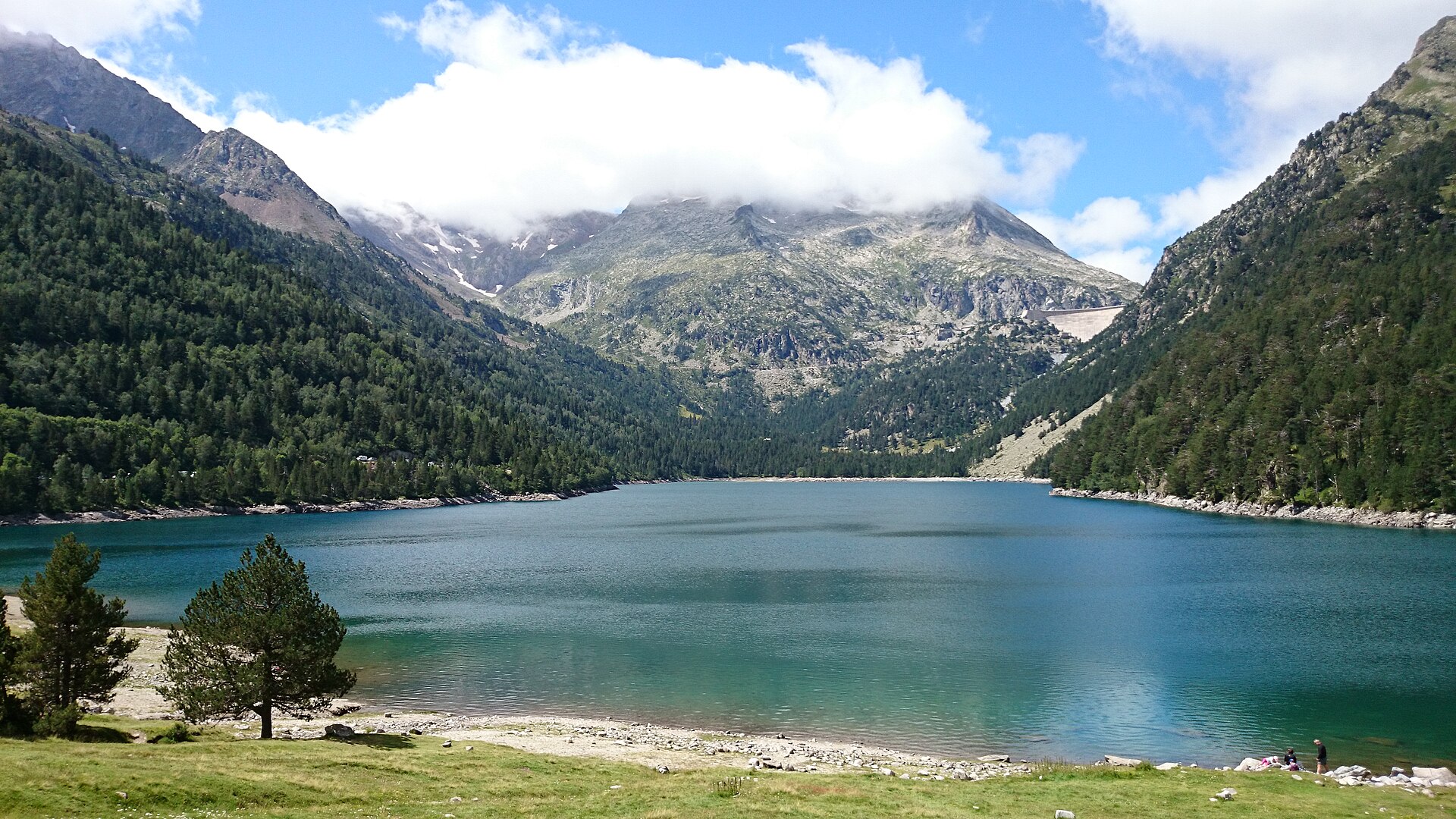
Orédon lake in the Néouvielle nature reserve — Photo: PACI LAETITIA · CC BY-SA 3.0.
A five-day planning outline
- Arrive, settle in and take a short orientation walk.
- Use the first hike to assess the group’s pace.
- Attempt the main outing if weather and energy allow.
- Keep a flexible day for rest, a village or a short walk.
- Finish with a walk compatible with the journey home.
This is a scheduling outline, not a marked circuit. Build it around one base and retain the option to swap days.
FAQ
Are the Pyrenees suitable for beginners?
Yes, with a route matching the group and confirmed suitable. The same area can also contain demanding trails.
Do I need a car?
Not always. Check transport to accommodation and trailheads, including a workable return after walking.
Should I reserve huts?
Reservations and service checks help make a trek practical. Do not assume a bed or meal will be available.
Can I bivouac anywhere?
No. Check the relevant park, reserve or local rules.
When should I turn back?
When tiredness, time, weather or terrain make continuing unsuitable for the group. Reaching a lake or pass is optional.
Official sources
Checked on 2 October 2026. Recheck conditions, services and rules for your actual travel dates.
- Turismo de Aragón — Valle de Ordesa
- Generalitat de Catalunya — Aigüestortes i Estany de Sant Maurici
- Parc national des Pyrénées — Préparer sa randonnée
- Aigüestortes — Itinéraires recommandés
- Parc national des Pyrénées — Bivouac
- Parc national des Pyrénées — Réglementation