
Hiking in Brazil
Sandstone plateaus and waterfalls, lagoons between dunes, granite peaks above the Atlantic forest: hiking in Brazil offers landscapes found nowhere else.

Hiking places
Routes to explore
- Vale do Pati
- Petrópolis–Teresópolis
- traversées des Lençóis
Quick answer: where to go hiking in Brazil?
Hiking in Brazil centres on four main areas: Chapada Diamantina (Bahia) and its Vale do Pati trek, Chapada dos Veadeiros (Goiás), the Serra dos Órgãos near Rio de Janeiro and the Lençóis Maranhenses dunes (Maranhão). The dry season, roughly May to October, is best in the Chapadas. In the Lençóis, the lagoons are fullest from June to September. A local guide is strongly recommended in the Vale do Pati, and an overnight Petrópolis–Teresópolis traverse must be booked with the park.
| At a glance | |
|---|---|
| Where | Chapada Diamantina, Chapada dos Veadeiros, Serra dos Órgãos, Lençóis Maranhenses |
| For whom | From day hikers to multi-day trekkers |
| When | May to October (Chapadas); June to September (Lençóis lagoons) |
| Suggested length | 3 to 5 days for the Vale do Pati; 2 to 3 days for Petrópolis–Teresópolis |
| Plan for | Local guide, park booking for overnight stays, authorised vehicles in the Lençóis |
| Watch out for | Heat, flash floods in the rainy season, no phone signal |
Where to go hiking in Brazil
Brazil is huge: its four best-known hiking areas are thousands of kilometres apart. Pick one or two regions and factor in domestic flights. Chapada Diamantina and Chapada dos Veadeiros are inland plateaus; the Serra dos Órgãos is reached from Rio; the Lençóis Maranhenses lie on the north coast.
Plan a hike in Brazil around three questions: the season, access to the trailhead and whether you need a guide. Trails are often poorly marked and phone signal is rare in natural areas.
Choosing your hiking region in Brazil
Chapada Diamantina: the Vale do Pati trek
Chapada Diamantina, in central Bahia, is a sandstone plateau cut by canyons, waterfalls and caves. Its most famous trek, the Vale do Pati, usually takes 3 to 5 days, with nights in local homes in the valley. A guide is not legally required but is strongly recommended: waymarking is limited, there is no signal and rescue is difficult.
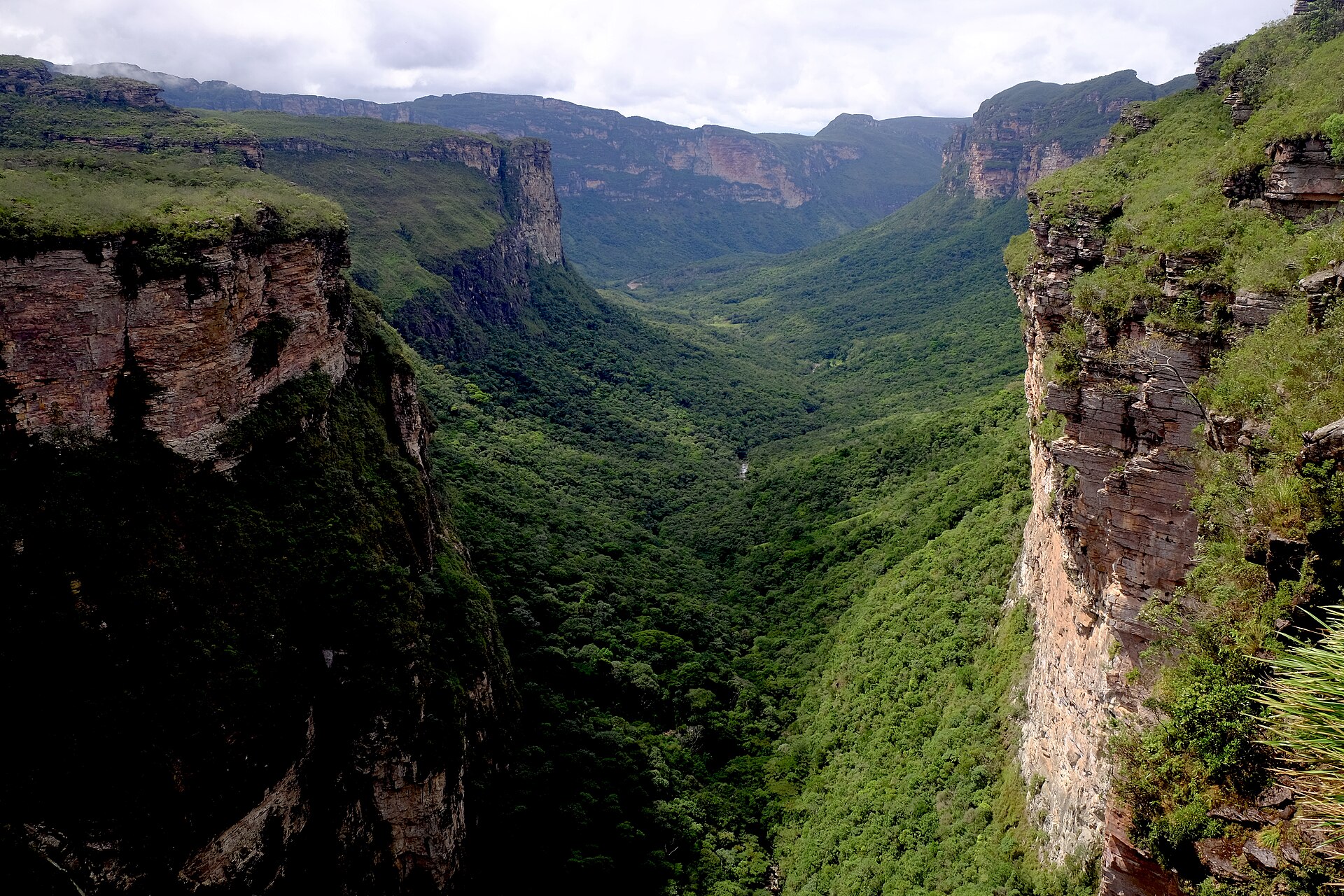
The Vale do Pati in Chapada Diamantina — Photo: Jardelsliumba · CC BY-SA 3.0.
Chapada dos Veadeiros: canyons and cerrado savanna
In Goiás, north of Brasília, Chapada dos Veadeiros National Park combines cerrado savanna, canyons and waterfalls. Most hikes are day walks from Alto Paraíso or São Jorge on trails managed by the park. Check entry times and open trails before you go.
Serra dos Órgãos: the Petrópolis–Teresópolis traverse
Serra dos Órgãos National Park, a few hours from Rio de Janeiro, is known for granite peaks such as the Dedo de Deus. The Petrópolis–Teresópolis traverse takes 2 to 3 days. For an overnight traverse, ICMBio, the park manager, requires an advance booking, an access authorisation, a signed risk form and a kit to carry out your waste. One-day traverses follow different time rules.
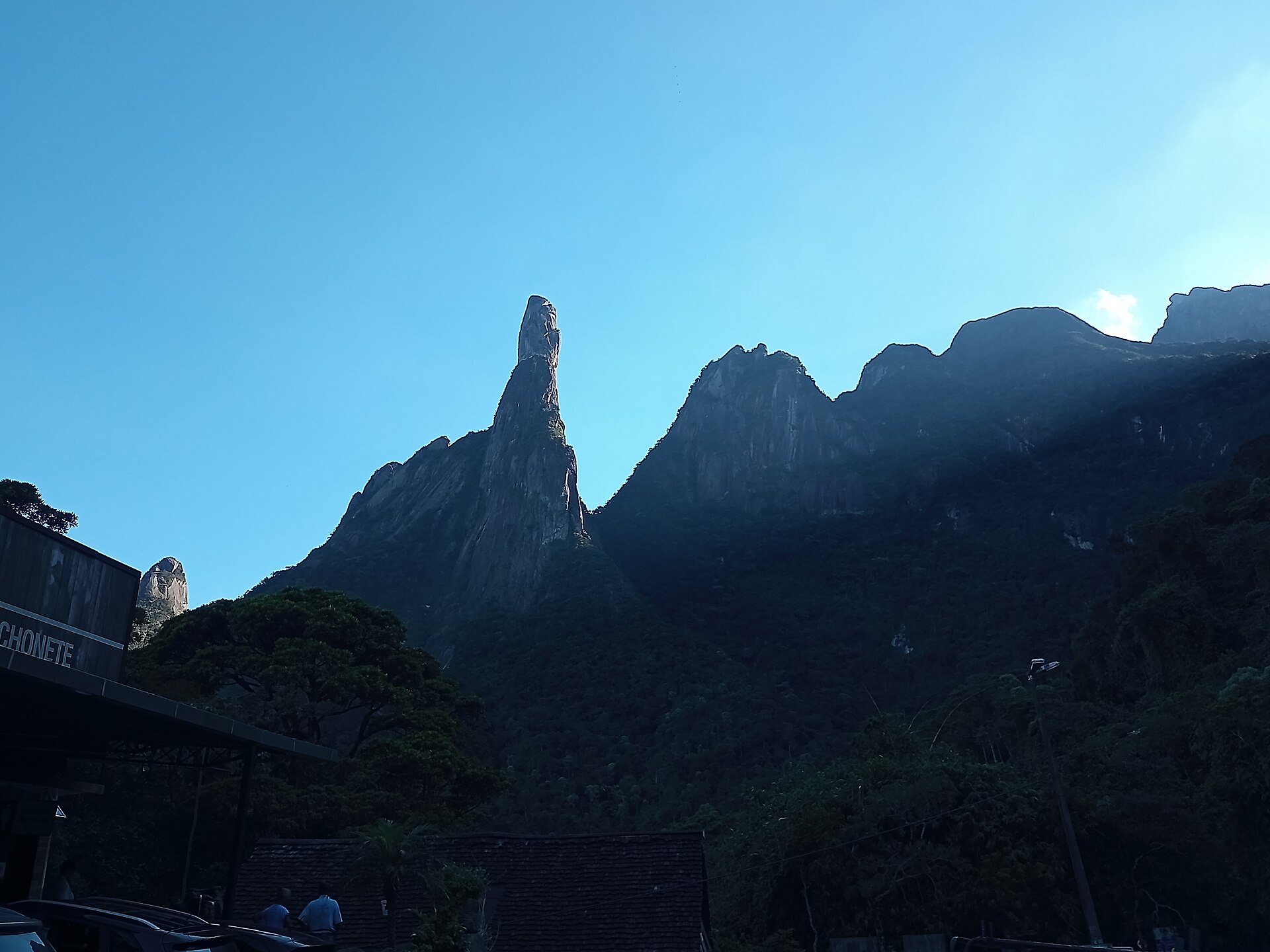
The Dedo de Deus in the Serra dos Órgãos — Photo: Rafael Deminicis · CC BY 4.0.
Lençóis Maranhenses: walking between dunes and lagoons
Listed as a UNESCO World Heritage Site in 2024, Lençóis Maranhenses National Park is a field of white dunes where rainwater lagoons form. Excursions and traverses run with authorised guides and vehicles from Barreirinhas, Santo Amaro do Maranhão or Atins. The lagoons fill during the rainy season and are usually fullest from June to September; many dry out from October.
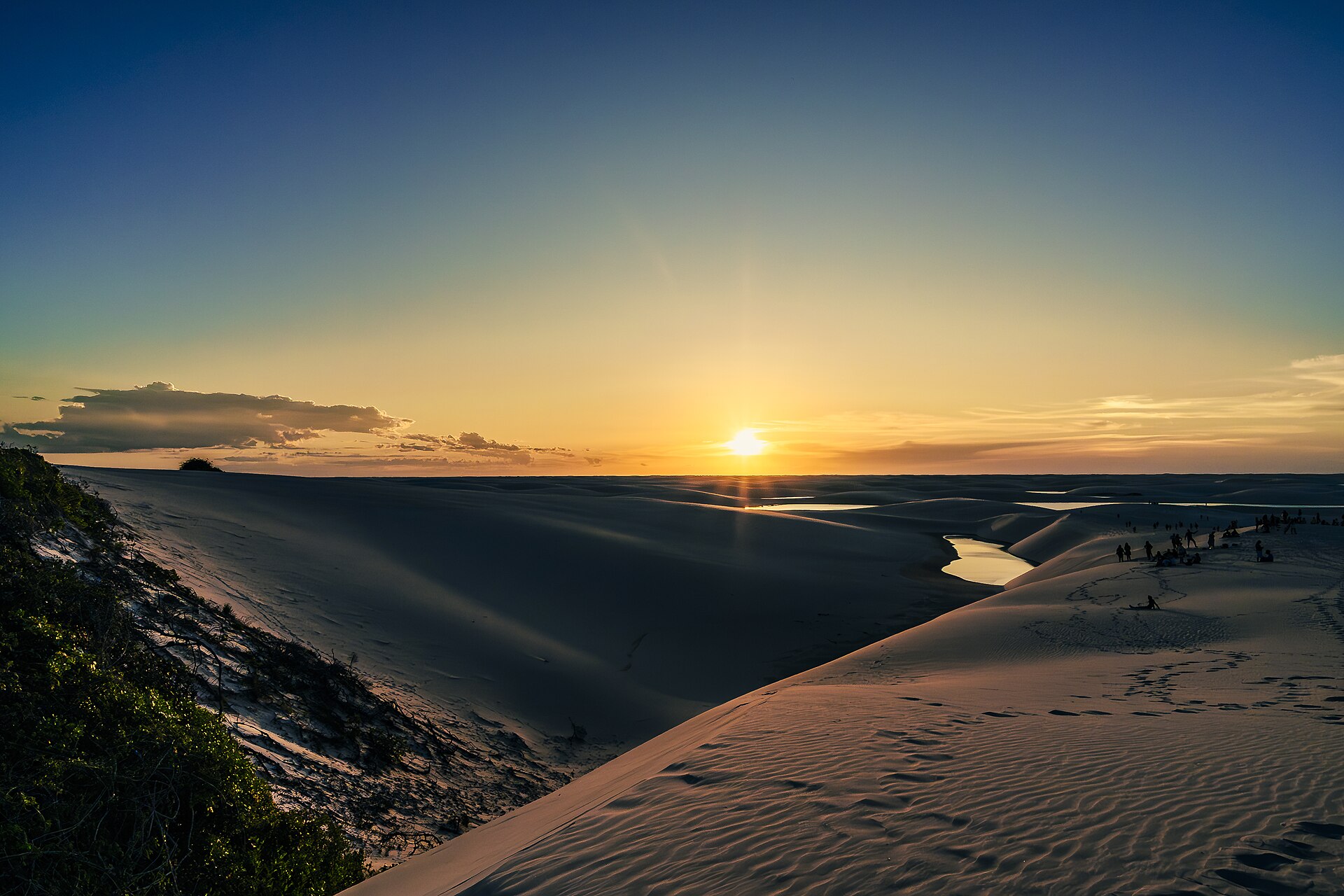
Sunset over a lagoon in the Lençóis Maranhenses — Photo: Rocsilva · CC BY-SA 4.0.
When to go hiking in Brazil
In the Chapadas, the dry season, roughly May to October, brings firmer trails and clear skies, with smaller waterfalls. The rainy season, November to April, fills the waterfalls but makes trails muddy and brings a risk of flash floods in canyons. In the Lençóis Maranhenses, the best time to see full lagoons is June to September; July is the busiest month.
Bookings, guides and organisation
- Guide: strongly recommended in the Vale do Pati; in practice required in the Lençóis, where trips run with authorised guides and vehicles.
- Booking: required for overnight stays on the Petrópolis–Teresópolis traverse, on the ICMBio website.
- Transport: domestic flights to Salvador or Lençóis (Bahia), Brasília (Veadeiros), Rio de Janeiro (Serra dos Órgãos) and São Luís (Lençóis Maranhenses).
- Communication: download offline maps; there is no signal on most treks.
Gear and safety
Bring plenty of water and a way to treat it, strong sun protection, a hat, a light rain jacket and quick-drying shoes. In canyons, give up a river crossing or narrow passage if rain threatens upstream. In the Lençóis, glare from the white sand calls for sunglasses and skin protection.
Frequently asked questions about hiking in Brazil
Do I need a guide for the Vale do Pati?
A guide is not legally required but is strongly recommended: the trail is poorly marked, has no signal and rescue is difficult. A guide also knows the water points and homestays in the valley.
When are the Lençóis Maranhenses lagoons full?
Usually from June to September, after the rainy season. From October, many lagoons dry out.
Do I need to book the Petrópolis–Teresópolis traverse?
Yes for an overnight traverse: ICMBio requires an advance booking and access authorisation. Check the current rules on the park website.
What is the best season for hiking in Brazil?
The dry season, roughly May to October, for the Chapadas and the Serra dos Órgãos; June to September for the Lençóis Maranhenses.
Sources
Sources checked on 20 October 2026. Check park rules and conditions before you travel.
- ICMBio — Petrópolis–Teresópolis traverse
- UNESCO — World Heritage listing of Lençóis Maranhenses National Park (2024)
- Vale do Pati hiking guides (guide recommendation, length and season), cross-checked across several specialist sources