
Hiking in Cuba
Beyond cities and beaches, explore Cuba on foot through valleys, wooded mountains and rural landscapes.

Hiking places
Routes to explore
- Pico Turquino
- sentiers de Topes de Collantes
Hiking guides
Where should you hike in Cuba?
Start by choosing an area: Viñales for valley landscapes, Topes de Collantes for nature outings near Trinidad, or the Sierra Maestra for a mountain-focused stay. Baracoa offers another option in the east. These are not stops on a short local circuit: match the number of destinations to transfer times and the days you actually have available.
Walking can complement a cultural holiday rather than become a series of sporting challenges. A moderate outing leaves time for scenery, villages and local encounters. Before booking, decide whether you want several day walks, a guided excursion or a mountain objective requiring more preparation. Then check the conditions of the specific activity instead of assuming every destination operates in the same way.
Choosing a walking area
Viñales: valleys and rural scenery
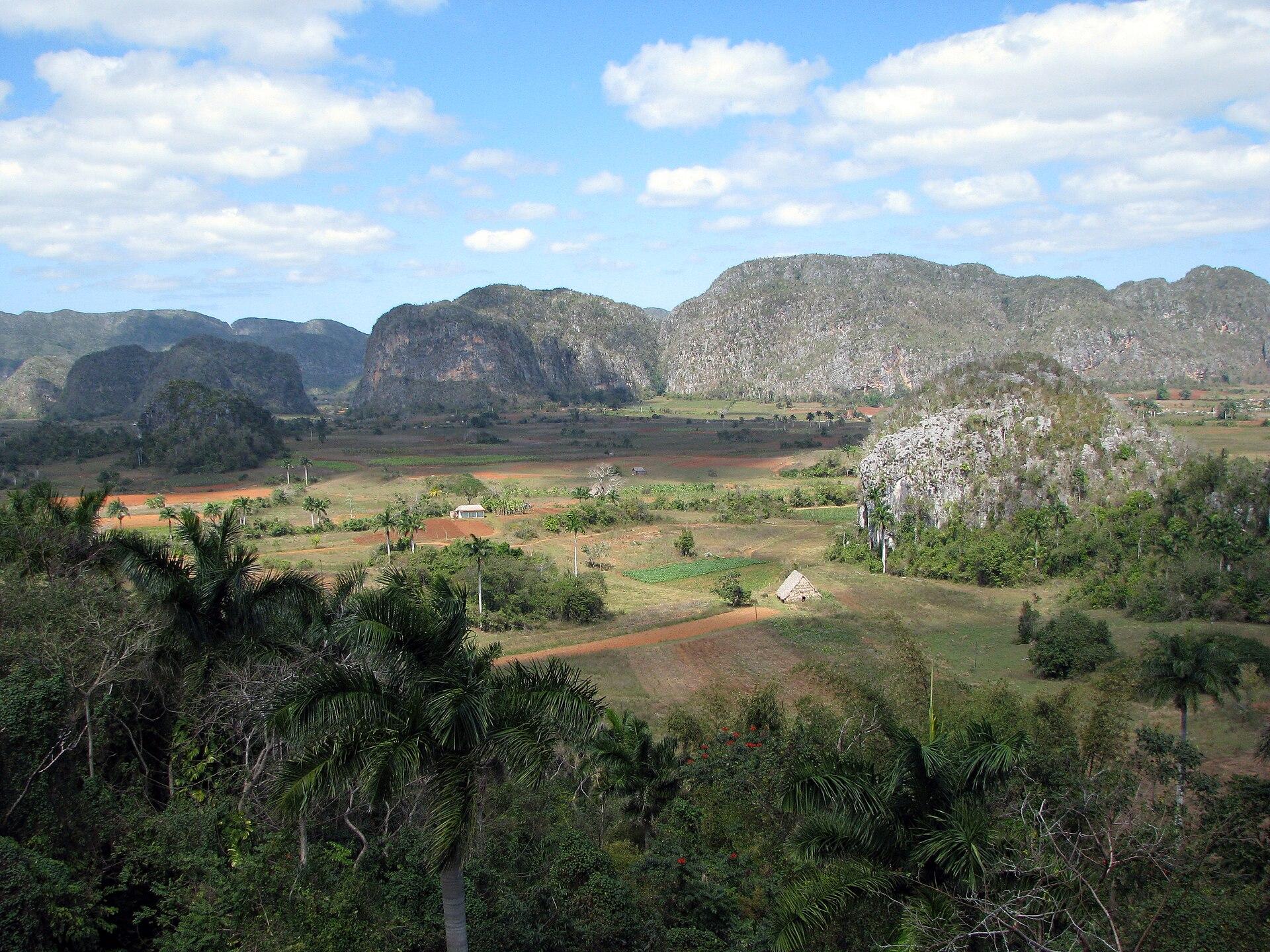
Viñales offers an introduction to western rural landscapes. Limestone formations known as mogotes give the valley its character. Walks can fit a stay returning to the same accommodation, without adding repeated transfers. Read the options presented by Cuba Travel, then ask about the exact activity you are considering.
To choose a walk and prepare it, see our guide to hiking in Viñales.
Distinguish a valley walk, an excursion combining several activities and a cave visit. These have different demands and equipment requirements. A landscape photograph is not enough to choose an outing. Ask about starting points, expected duration, terrain and inclusions. Respect fields and private property: open scenery does not mean that every path can be used freely.
Topes de Collantes: a nature day from Trinidad
Topes de Collantes offers nature experiences in the Trinidad area, including routes associated with waterfalls. Caburní and Vegas Grandes are distinct objectives. Consult the official regional overview to understand the possibilities, then confirm the chosen outing rather than assuming that every trail follows identical arrangements.
Organise the journey from your accommodation to the trailhead as well. An excursion lasting a few walking hours can occupy more time once transport, stops and the return are included. Leave room to enjoy Trinidad without stacking every visit into one day. If an activity includes swimming, check that it is offered and permitted under the day’s conditions. Arriving near a waterfall is not sufficient reason to enter the water.
Sierra Maestra: organise a mountain objective
The Sierra Maestra suits a stronger mountain interest. Pico Turquino is a known objective, but should not be added to a holiday simply because it appears on a map. Confirm starting arrangements, guidance and any overnight stay with the organiser or responsible manager. Your experience and the group’s condition matter as much as the summit’s name.
Allow for the journey to the area, available walking time and an alternative if plans change. A less demanding objective may fit a first visit better. Compare activities according to the actual route rather than only the title. Ask what is provided, how much you must carry and how the return works before committing. Make sure everyone understands the expected effort.
Baracoa: another experience in the east
Around Baracoa, hills, rivers and wooded scenery create a different setting. El Yunque is among the names featured in local nature activities. Check the regional information for options and availability. A tourism overview does not guarantee that every excursion runs on your travel dates.
This area also needs considering within the whole journey. Adding a distant destination during a short island visit can reduce walking days. If the east is your priority, build the holiday around it rather than treating it as one final excursion. Leave time for scenery and local discovery instead of fitting several activities into a tightly packed day. A smaller route can offer more time to understand the place.
Timing and adapting the walking day
Choose hours and effort around heat, forecast rain and terrain. An early start can help organise a day, but does not replace checking conditions. Ask what the weather means for the actual route, particularly when it involves a river, wet ground or mountain passages. Keep an alternative rather than treating a booked excursion as an objective that must be completed.
Use a moderate first outing to understand your pace in these conditions. Elevation gain alone does not explain fatigue: exposure, humidity, breaks and the path’s condition also affect the day. Alternate walks with cultural discoveries. An enjoyable stay does not require walking every day or reaching every well-known viewpoint. Choose time to recover rather than simply adding another activity to fill the programme.
To compare with other destinations, see our month-by-month calendar of the best time to go hiking.
Transport, local support and equipment
Confirm transport, meeting time and return before booking consecutive activities. Ask the responsible manager whether guidance or authorisation is required. Check price inclusions: entry, guide, meals and transfers may have separate arrangements. Keep practical information offline instead of making the programme depend on immediate internet access. Leave enough time between a walk and any onward travel reservation.
Pack suitable footwear, water, food as needed, sun and rain protection, first-aid supplies and clothing appropriate to the terrain. For an overnight stay, ask precisely what equipment is provided. Do not rely on an unconfirmed water supply or purchase along the route. Respect protected areas, wildlife and heritage, and carry out rubbish. Choose services that meet your needs without assuming that one excursion’s rules apply to another.
Common questions about hiking in Cuba
Where should you start?
Choose a moderate, clearly explained outing that fits your wider journey. Viñales or an excursion around Trinidad may work with a fixed base. That does not make every walk in either area easy: examine the specific activity and its return arrangements.
Is a guide needed everywhere?
Requirements depend on the location and activity. Ask before setting off and do not transfer valley rules to a park or mountain excursion. Local guidance can also help interpret landscapes and understand how places are used, beyond simply following the path.
Can you combine several areas in a few days?
Distances and logistics matter as much as walking duration. With limited time, one base and selected outings often offer more enjoyment than continual moves. Limit the number of stops and confirm journeys before adding objectives that depend on distant starting points.