
Hiking in Zimbabwe
Quartzite ridges, hidden valleys and fog-swept plateaus: hiking in Zimbabwe happens in the Eastern Highlands, far from the safari circuits.

Hiking places
Routes to explore
- Parcours des Chimanimani à préciser
Quick answer: where to go hiking in Zimbabwe?
Hiking in Zimbabwe mainly takes place in the Eastern Highlands, along the border with Mozambique: in the Chimanimani mountains and in Nyanga National Park, home to Mount Nyangani, the country’s highest point. The best time is the dry season, roughly April to October. Park entry is paid to ZimParks, the national parks authority. In Chimanimani, ask at the park office whether you need to be accompanied before you set off.
| At a glance | |
|---|---|
| Where | Chimanimani mountains; Nyanga National Park (Eastern Highlands) |
| For whom | Self-sufficient hikers used to mountain terrain |
| When | April to October (dry season) |
| Suggested length | 1 to 3 days per range |
| Plan for | ZimParks entry fee, a map, plenty of water |
| Watch out for | Sudden fog on Nyangani, floods in the rainy season, isolation |
Where to go hiking in Zimbabwe
Zimbabwe is best known for its wildlife parks and Victoria Falls. For hiking, head east to the Eastern Highlands, a mountain chain along the Mozambique border. Two areas stand out: Chimanimani in the south and Nyanga in the north.
These mountains see few visitors and trails are sometimes poorly marked. Good preparation and an offline map are essential.
Choosing your range in Zimbabwe
Chimanimani: quartzite ridges and the Bundi valley
The Chimanimani mountains, shared between Zimbabwe and Mozambique, raise quartzite ridges above grassy valleys and clear streams. On the Zimbabwean side, the national park is reached from Chimanimani village. A climb of a few hours leads to a mountain hut by the Bundi river, a base for exploring the range.
Call at the ZimParks office in the village before setting off: you pay entry fees there and get the current rules, including on whether hikers must be accompanied.
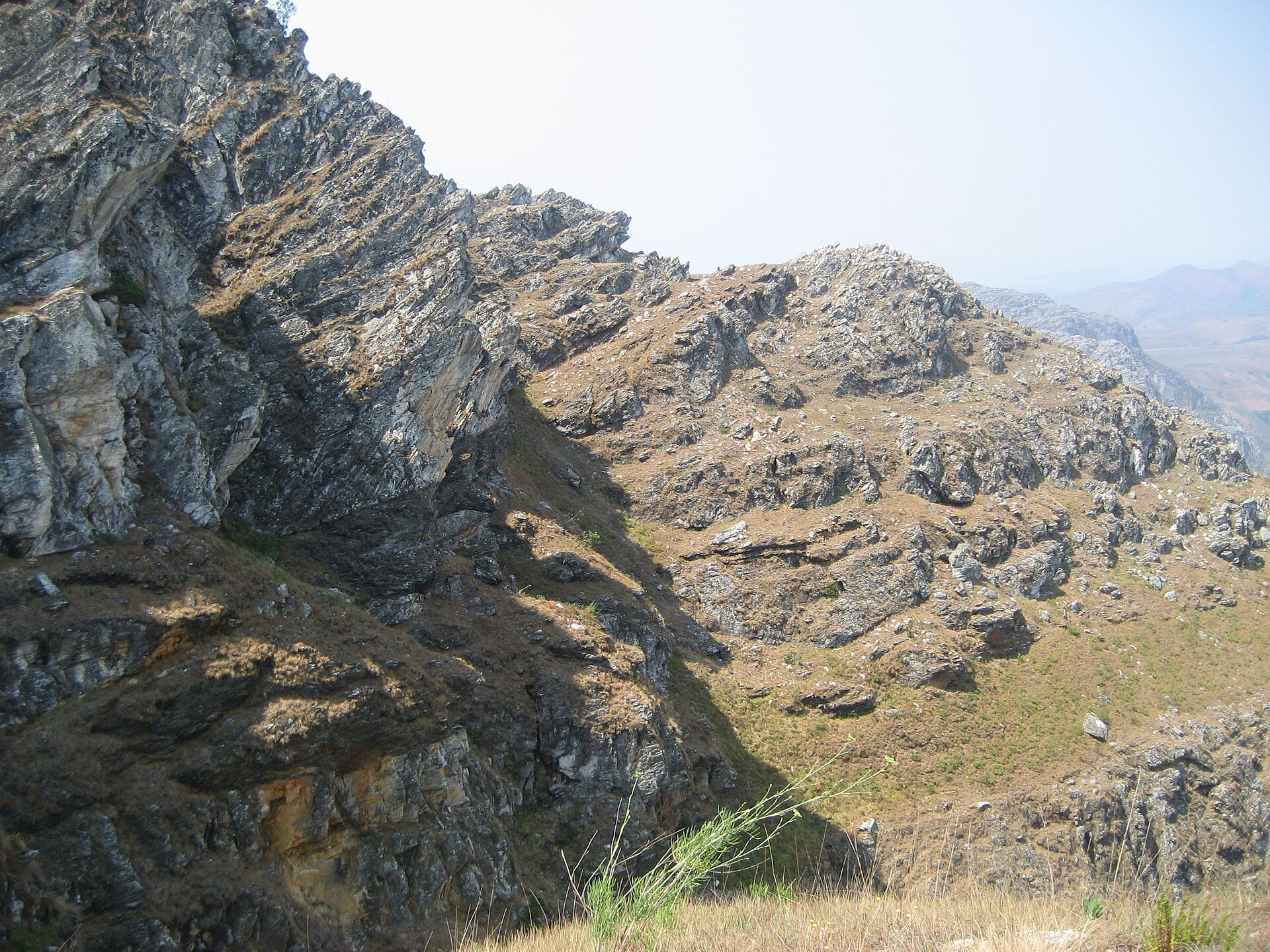
The Chimanimani mountains on the Zimbabwe–Mozambique border — Photo: Ton Rulkens · CC BY-SA 2.0.
Nyanga: Mount Nyangani and World’s View
Further north, Nyanga National Park covers high plateaus, forests and waterfalls. Mount Nyangani, Zimbabwe’s highest point, can be climbed in a day. The summit is known for fog that rolls in without warning, and hikers have got lost there. Start early, follow the markers and turn back if visibility drops.
Nearby, the World’s View viewpoint looks out over the plains far below.
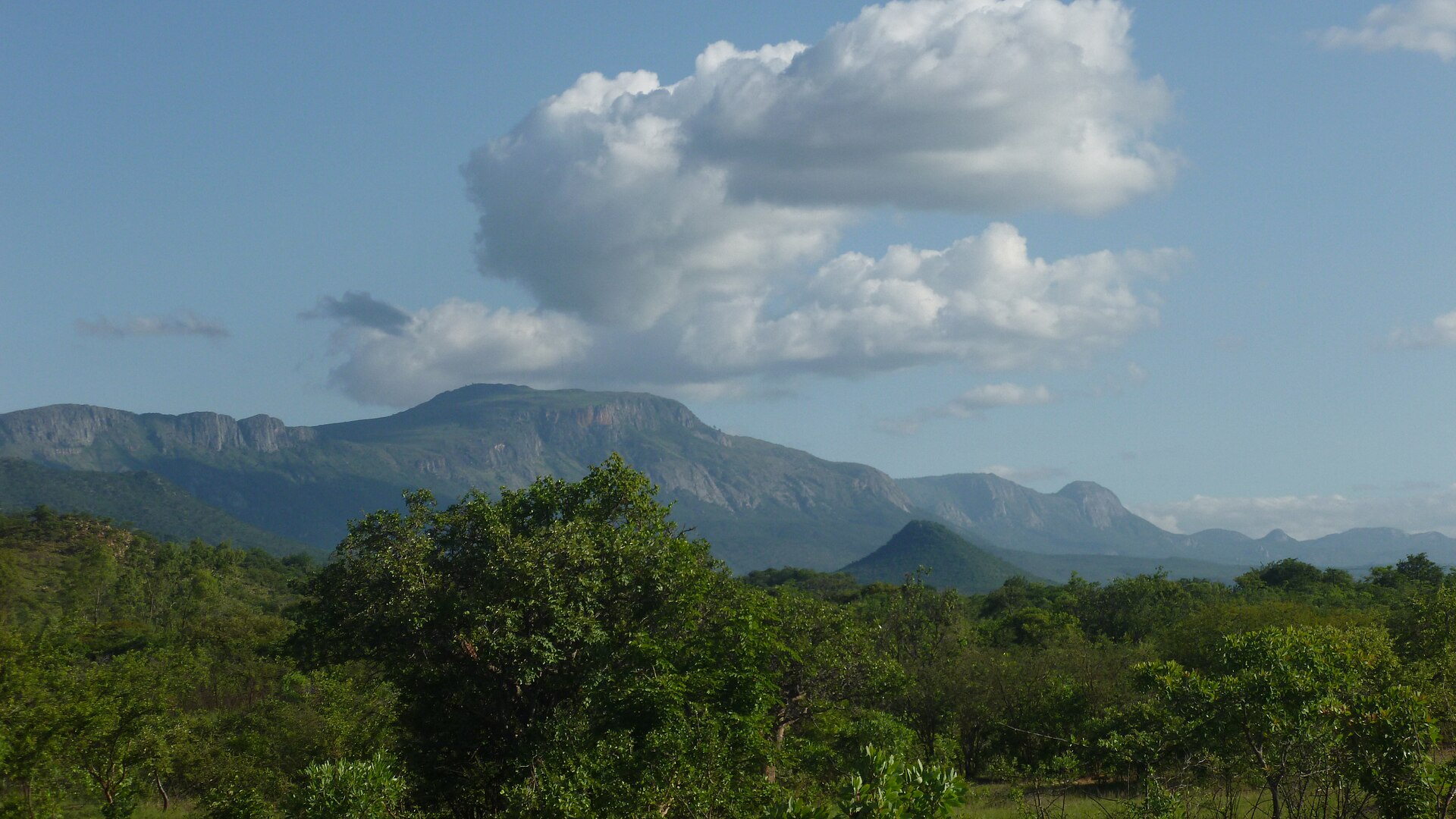
The Eastern Highlands around Nyanga — Photo: Seabifar · CC BY-SA 4.0.
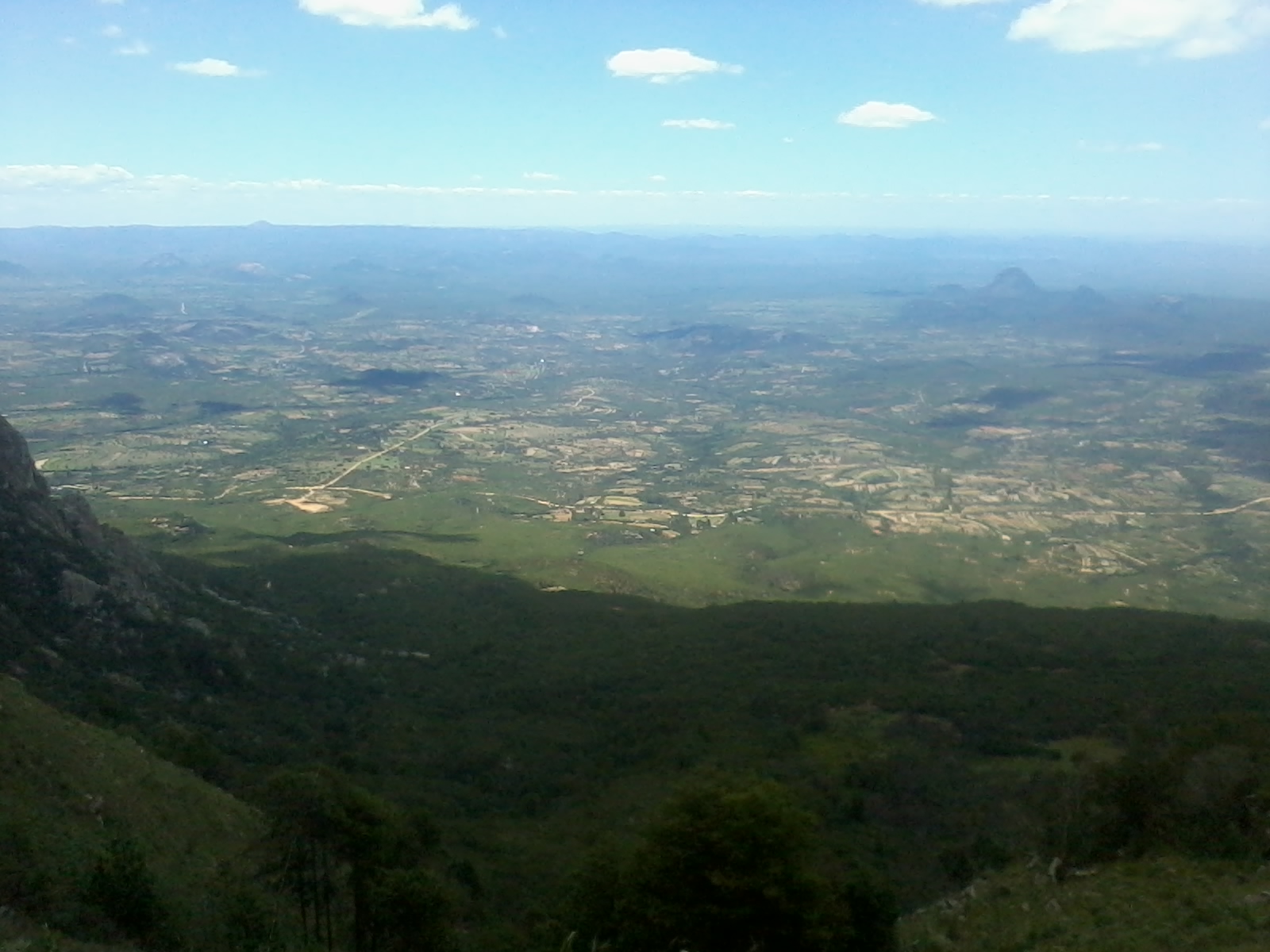
The view from World’s View in Nyanga — Photo: Teddy Matendawafa · CC BY-SA 4.0.
When to go hiking in Zimbabwe
The dry season, roughly April to October, is best. May to August is cool, with cold nights at altitude. From November to March, heavy rain makes rocks slippery and causes flash floods in the Chimanimani valleys.
Organisation and safety
- Park entry: fees are paid to ZimParks; check current rates and rules before you go.
- Accompaniment: ask at the park office, especially in Chimanimani.
- Transport: a vehicle is almost essential to reach the Eastern Highlands from Harare or Mutare.
- Travel advice: check your government’s official advice before you travel.
Gear and responsible hiking
Bring a waterproof jacket and warm layer, good boots, a way to treat water, an offline map and a head torch. Leave your route and return time with your accommodation. Carry out your rubbish and only light fires in authorised places.
Frequently asked questions about hiking in Zimbabwe
What is the highest point in Zimbabwe?
Mount Nyangani, in Nyanga National Park. It can be climbed in a day, but fog can come down very quickly.
What is the best season for hiking in Zimbabwe?
The dry season, roughly April to October. The rainy season, November to March, brings a risk of flash floods.
Do I need a guide in Chimanimani?
Ask at the ZimParks office in Chimanimani village: accompaniment rules can change. A local guide also helps on poorly marked trails.
Can you hike in Zimbabwe without a car?
It is difficult: the Eastern Highlands are remote and poorly served. A vehicle or organised transfer is almost essential.
Sources
Sources checked on 24 October 2026. Check ZimParks rules and travel advice before you go.