
Hiking in South Africa
Drakensberg mountains, Cape Town’s hills, Cederberg rock formations and Garden Route forests: choose the landscape that will shape your walking holiday.

Hiking places
Routes to explore
- Otter Trail
- Outeniqua Trail
- Amphitheatre
Hiking guides
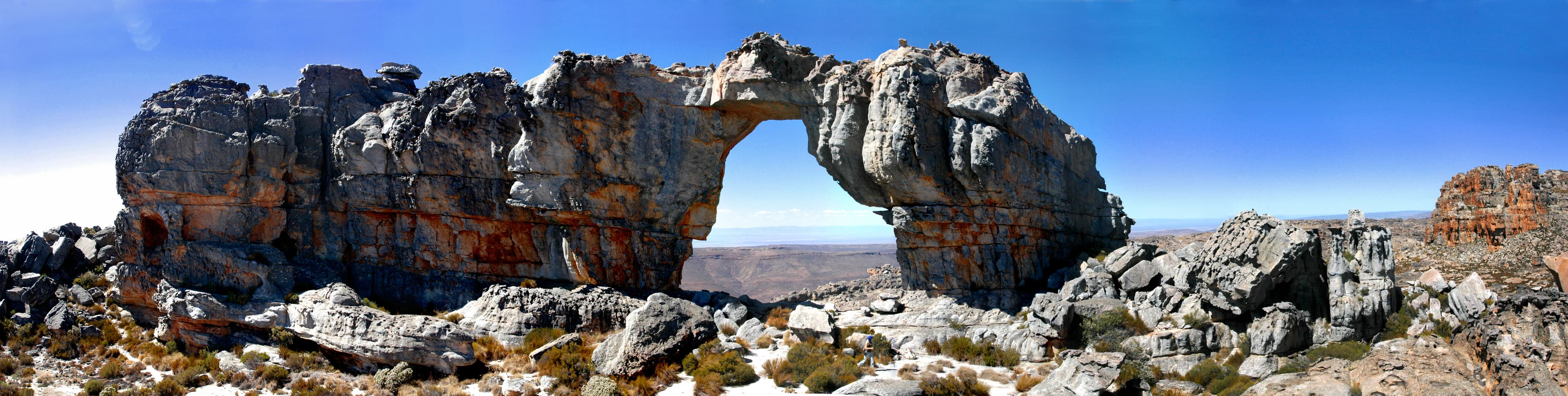
Cederberg: hiking and travel guide to South Africa’s sandstone mountains
Plan a Cederberg trip: Maltese Cross and Wolfberg Arch hikes, best seasons, access from Cape Town, 2026 closures, where to stay and what to pack.
Cederberg · GUIDE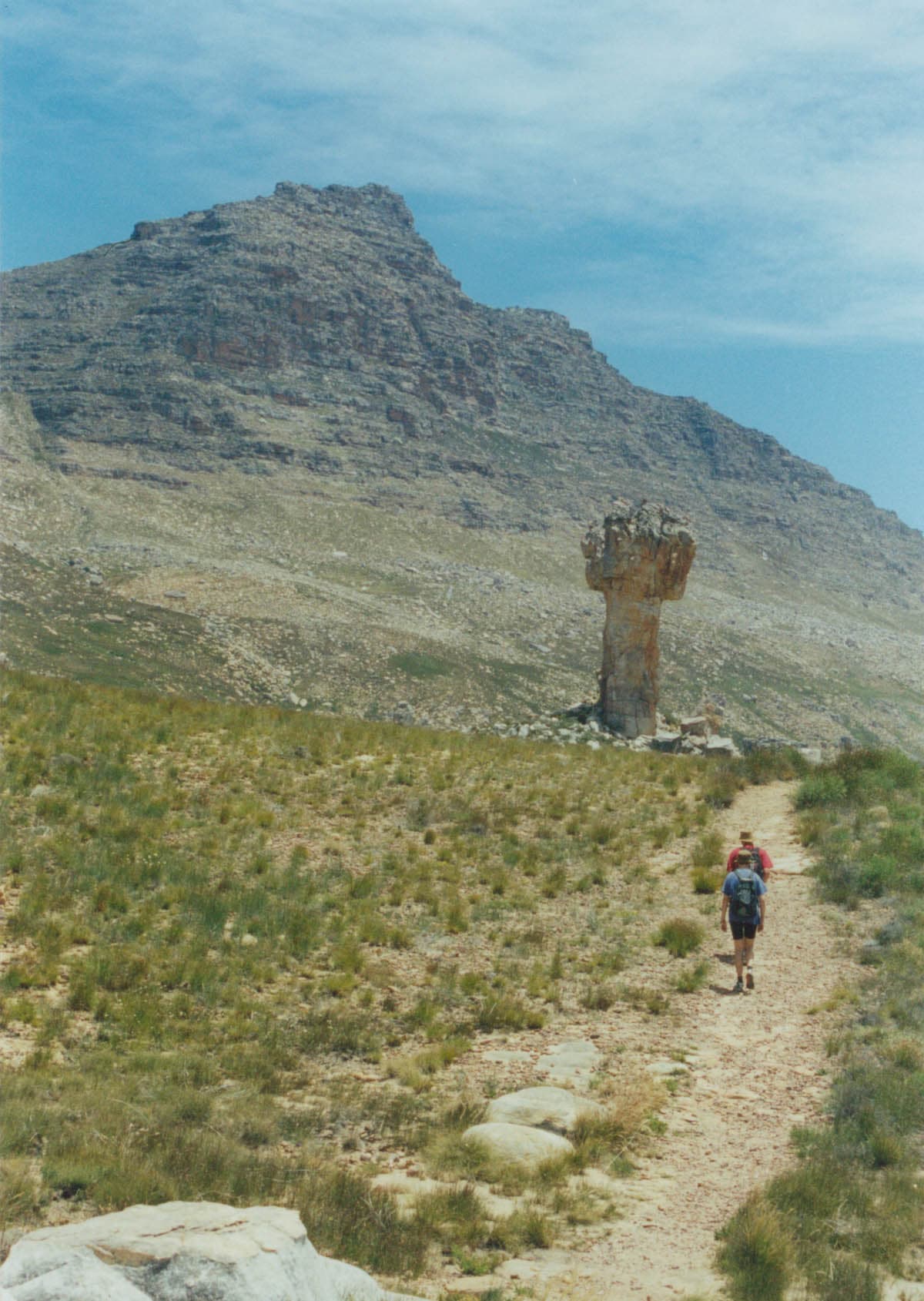
Maltese Cross hike: planning your Cederberg walk
Plan the Maltese Cross hike in the Cederberg: Sanddrif map, trailhead, permits, walking times, terrain, equipment and access checks.
Cederberg · GUIDEWhere should you hike in South Africa?
Four destinations offer very different walking holidays: the Drakensberg for mountain landscapes, Table Mountain for walks alongside a Cape Town stay, the Cederberg for rocky scenery and the Garden Route for forests and coast. Choose a region first, then a route within your experience. Distances between these areas make a programme that tries to visit everything in a few days a poor fit for a walking holiday.
For a first trip, select a base near several suitable starting points and alternate walks with local exploration and rest. South Africa offers more than safari holidays: travelling on foot lets you discover other landscapes and spend longer in each place. However, a mountain walk, a coastal trail and an activity in a wildlife reserve have different rules. Ask the organisation managing the site about access before building your itinerary around a particular route.
Four regions to shape your trip
Drakensberg: valleys and mountain horizons
The Drakensberg offers day walks as well as more demanding objectives. Choose one area rather than repeatedly moving between distant bases. Royal Natal, Cathedral Peak and Giant’s Castle correspond to different starting areas, rather than one interchangeable circuit. South African Tourism’s Drakensberg day walks introduce the range of outings available across the mountains and help put the region in context.
Compare the terrain and elevation gain of your specific route. A photograph of the Amphitheatre does not explain how to reach a viewpoint. Some objectives require much greater independence than walks around your accommodation. Keep a shorter alternative and consider local guidance when you lack experience assessing the terrain or conditions. A well-chosen outing matters more to the quality of your holiday than the number of summits or famous viewpoints you reach.
Table Mountain: plan the outing from Cape Town
Table Mountain offers a way to explore the mountains near Cape Town, but proximity to the city does not turn the terrain into an urban stroll. Plan your ascent and descent together. If your return depends on a transport service, confirm it and have an alternative if it is unavailable. Also arrange how you will reach the starting point and return to your accommodation, rather than leaving those details until the walk is over.
Read current SANParks advice on weather and personal safety. The organisation advises against hiking alone. A group or local guide can help you plan a suitable outing; a busy trail does not guarantee safety. Do not choose a route solely because it appears in famous photographs. Compare the demands with your abilities and those of the other participants, and ask for up-to-date local advice when deciding where and when to walk.
Cederberg: rocky scenery and a slower walking holiday
The Cederberg attracts walkers to its rocky landscapes and mountain spaces. Decide on your base and transport before choosing an outing: starting points are not all reached in the same way. Our Cederberg hiking guide covers routes such as Maltese Cross and Wolfberg Arch, seasons, access and where to stay. Allow time to enjoy the area rather than trying to include every well-known formation. A few suitable day walks can make a satisfying stay, especially when your trip also includes time in Cape Town or other nearby destinations.
Access involves different managers and properties. Check whether the route is open, what permission is needed and the relevant conditions with CapeNature or the responsible manager. An old guide or downloaded track does not prove that a path is open today. For a longer walk, think about water, return time and navigation before leaving your accommodation. Choose an objective that you can assess and complete with the equipment you actually carry.
Garden Route: forest walks, coastline and overnight trails
The Garden Route allows a holiday combining coastal discovery and forest walks. Separate day outings from routes requiring several nights. Choose walks close to your road-trip stops and leave time to enjoy the places between them. Fewer accommodation changes can mean more walking time, with less pressure to arrive somewhere new every evening. Check the starting point, access arrangements and finish before making a particular walk central to your travel day.
The Otter Trail is a five-day route from Storms River Mouth to Nature’s Valley. It requires appropriate preparation and booking rather than being a last-minute addition to a road trip. Follow the manager’s instructions, including those for river crossings. If the format does not suit your holiday, look for an authorised day walk in the area instead. Coastal scenery can be enjoyed without committing to this particular multi-day trail.
When should you travel and how flexible should you be?
There is no ideal period for every South African walk. Compare the region, elevation, available daylight and forecast, then ask about local conditions before your outing. A stay in Cape Town and a multi-day mountain journey involve different choices. The season alone cannot guarantee that a path will be enjoyable or suitable on your travel dates. Choose your destination and walking style together rather than selecting a month and assuming every route will work.
Leave room in the programme instead of making every objective compulsory. Choose a moderate first walk after arrival, save demanding days for when you are rested and keep an alternative if conditions deteriorate. Shortening an outing can protect the rest of your holiday. Do not wait until you are far from the starting point to decide that a route exceeds the group’s abilities. Agree in advance how you will change plans if necessary.
To compare with other destinations, see our month-by-month calendar of the best time to go hiking.
Access, permits and overnight stays
Access conditions vary with the reserve, property and activity. Ask whether a permit is needed, how to obtain it and which opening times apply. For an overnight hike, confirm where you can stay, meal arrangements, water availability and what you must carry. Do not assume that booking accommodation automatically includes every permission required for walking. Review these arrangements before paying for transfers or committing to a fixed sequence of stages.
For walking in a wildlife reserve, ask about guided activities and site rules: a vehicle visit does not authorise unrestricted walking. Separate accommodation, transport, entry fees, permits and any guiding when estimating your budget. Prices can change, so check them when booking. Choose a programme with realistic transfers and walking days rather than an extensive destination checklist. Include enough flexibility to deal with a closure or a booking that is unavailable.
Equipment, navigation and care for the landscape
Pack for the specific outing: familiar footwear, water, food, sun protection, a windproof and waterproof layer, additional warmth as conditions require, first-aid supplies and offline navigation. Find out how to seek help and leave your itinerary with someone you trust. A phone depends on battery life and reception; prepare a solution that does not rely entirely on an internet connection. Check your equipment before travelling rather than discovering missing essentials at the trailhead.
Respect permitted paths, closures and fire instructions. Do not touch rock paintings or remove anything from natural areas. Observe animals at a distance and carry out your rubbish. Use local services where they meet your needs and take time to understand the rules of each place. A rewarding hike combines the pleasure of walking with preparation and consideration for the people living around the routes, rather than treating the landscape as an unrestricted playground.
Common questions about hiking in South Africa
Which destination suits a first visit?
Choose around the holiday you want: Cape Town with suitable walks near Table Mountain, a Drakensberg base for mountains, the Cederberg for rocky landscapes or the Garden Route for coast and forest. The demands of the specific route matter more than the region’s name. Match your outings to the time and experience available.
Is a guide required for every walk?
Not necessarily, but some places or activities require supervision and others demand particular skills. Ask about the route rules and current safety advice. A guide is useful when you lack experience of the terrain or prefer support with planning. Make the decision around the outing itself rather than a general assumption about the country.
Can you visit all four regions in a week?
Such a wide programme leaves limited walking time and adds substantial travel. For one week, focus on a region or two nearby areas. This gives you more time to enjoy the walks and leaves room for weather changes and rest. A smaller itinerary can offer a richer experience than constantly moving between distant destinations.
Is a hiking app enough to choose a route?
A track helps with navigation planning, but does not confirm access, permits or current conditions. Compare it with information from the manager and verify the specific walk. Good preparation combines a route description, a map, local information and judgement on the ground. Treat an app as one tool rather than an assurance that the outing is appropriate.