
Hiking in Kyrgyzstan
Turquoise lakes, alpine valleys and nights in a yurt: hiking in Kyrgyzstan happens in the heart of the Tian Shan, in one of Central Asia’s most accessible mountain countries.
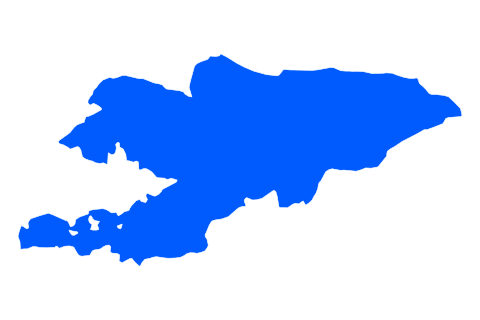
Hiking places
Routes to explore
- Ala-Kul
- Altyn Arashan
- Jyrgalan
Quick answer: where to go hiking in Kyrgyzstan?
Hiking in Kyrgyzstan centres on the Tian Shan mountains, especially around Karakol, the start of the Ala-Kul lake trek via the Altyn Arashan valley, and on the high pastures of Song-Kul lake. The main season runs from July to September. Classic routes such as Ala-Kul need no special permit, but areas near the borders, such as the Inylchek glacier or Khan Tengri, require a border-zone permit arranged through a local agency.
| At a glance | |
|---|---|
| Where | Karakol and Ala-Kul, Altyn Arashan, Song-Kul, Tian Shan |
| For whom | Fit hikers; treks from one to several days |
| When | July to September |
| Suggested length | 3 to 4 days for the Ala-Kul loop |
| Plan for | Tent or yurt stays, border permit for some areas |
| Watch out for | Altitude above 3,500 m, changeable weather, early-season snow |
Where to go hiking in Kyrgyzstan
Kyrgyzstan is almost entirely mountainous. Three bases feature in most hiking trips: Karakol, east of Lake Issyk-Kul, Song-Kul lake in the centre of the country, and the great ranges of the Tian Shan for more serious treks.
Hiking in Kyrgyzstan often combines walking with stays among herders: yurt camps in summer, guesthouses in villages. Classic routes are increasingly popular, but trails elsewhere remain poorly marked.
Choosing your trek in Kyrgyzstan
Karakol and Ala-Kul lake
From Karakol, the best-known loop climbs to the high-altitude Ala-Kul lake, then descends through the Altyn Arashan valley. It usually takes 3 to 4 days. The pass above the lake is over 3,500 m: acclimatise gradually and turn back if the weather worsens. This classic route does not require a border-zone permit.
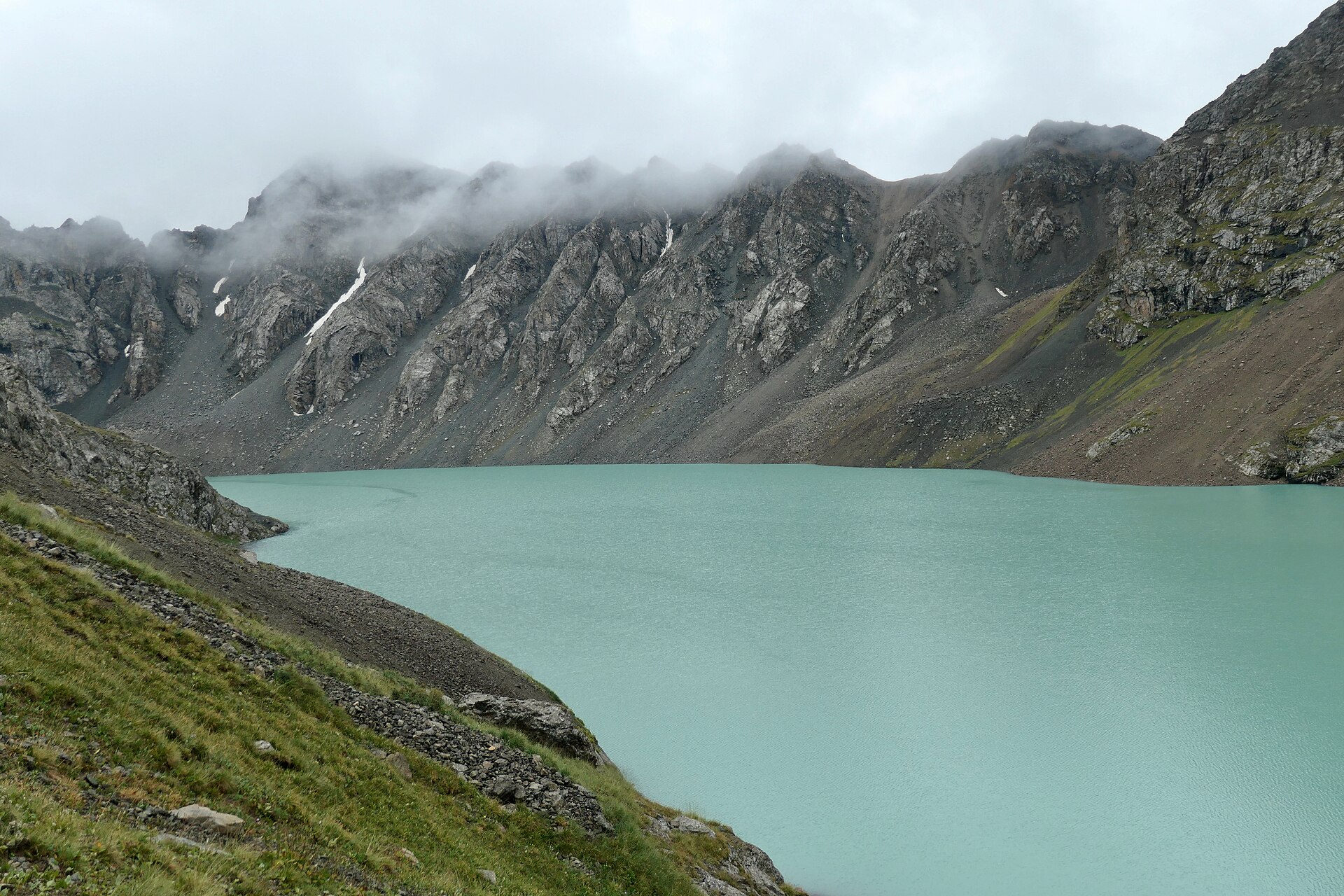
Ala-Kul lake above Karakol — Photo: Bruno Rijsman · CC BY-SA 2.0.
Altyn Arashan: hot springs and alpine pastures
The Altyn Arashan valley, known for its hot springs, is a stage of the Ala-Kul trek and a hiking destination in its own right. You can sleep in a yurt or guesthouse below the peaks. It is a good option for a shorter hike from Karakol.
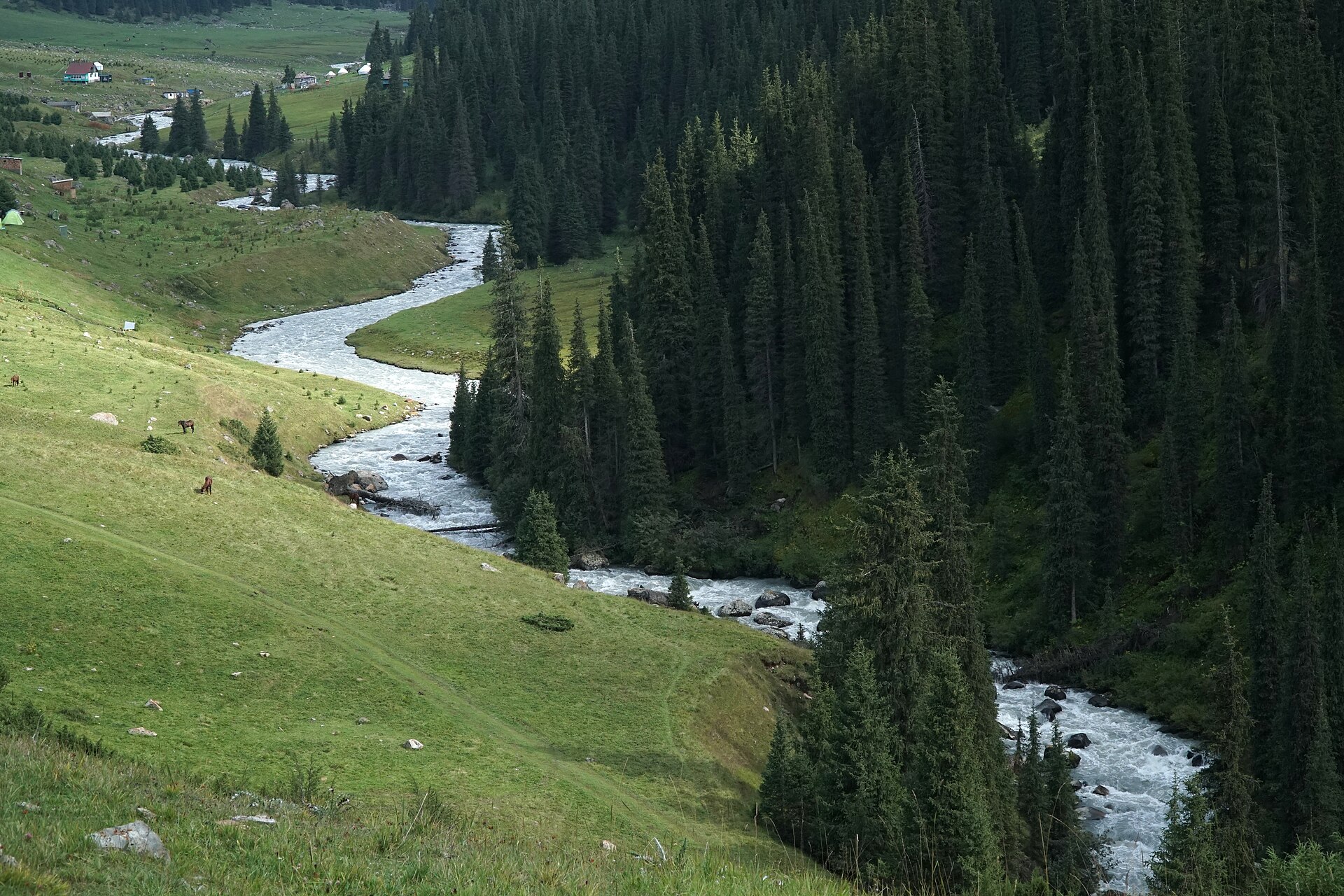
The Arashan river in the Altyn Arashan valley — Photo: Adam Harangozó · CC BY-SA 4.0.
Song-Kul: the nomads’ high pastures
Song-Kul lake, at about 3,000 m in Naryn province, is ringed by summer pastures where herding families set up camp. Hikes here are day walks or horse rides, with nights in yurt camps. Nights are cold even in summer, and access is by mountain tracks.
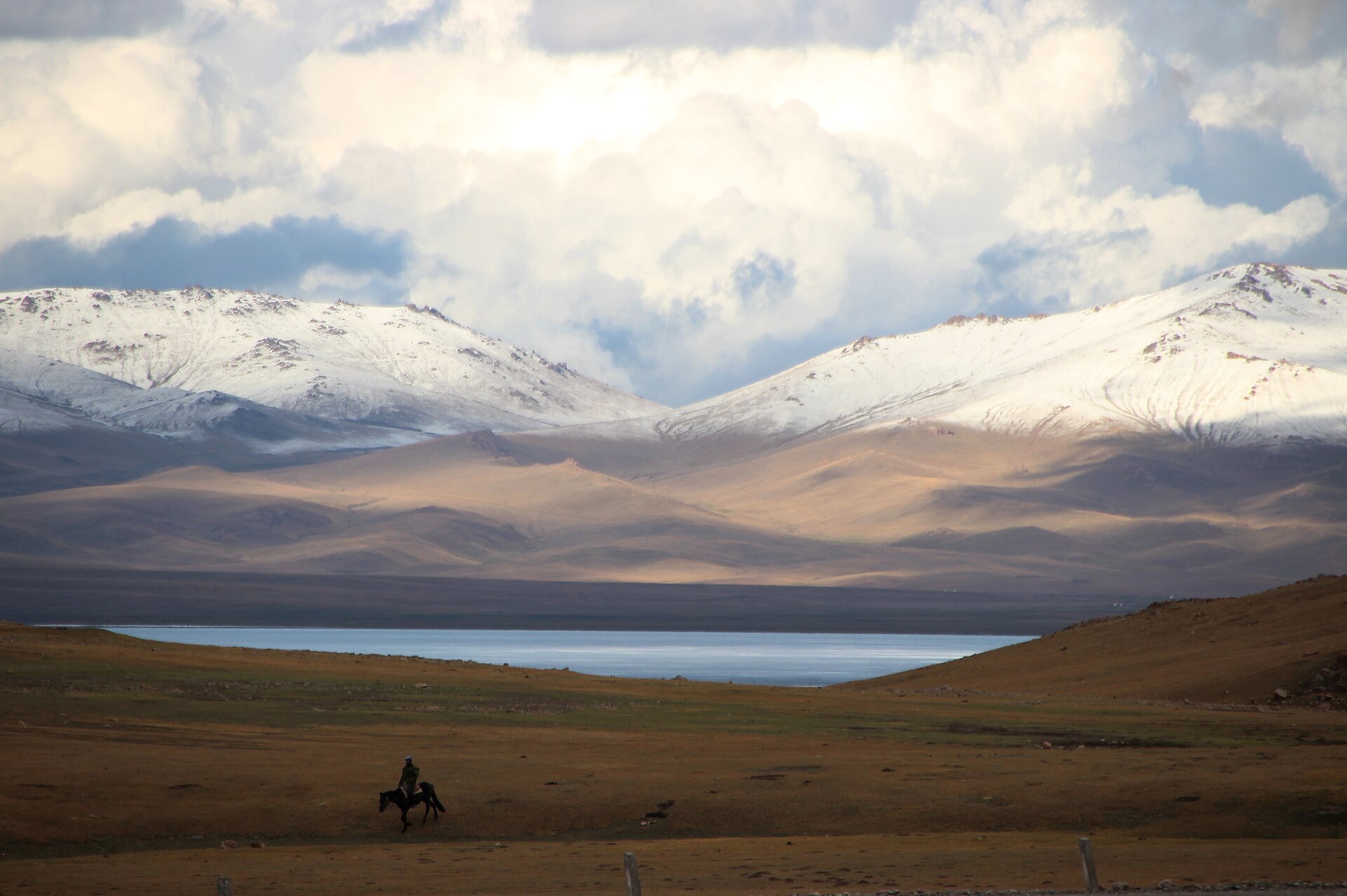
Song-Kul lake in Naryn province — Photo: Thomas Holbach · CC BY 4.0.
Tian Shan: the big treks and border zones
Treks to the Inylchek glacier, Khan Tengri base camp or the Sary-Jaz valley enter border zones. They require a special permit that only registered Kyrgyz agencies can request on behalf of travellers, with processing times from several days to several weeks. These routes are for experienced, self-sufficient trekkers.
When to go hiking in Kyrgyzstan
The hiking season runs from July to September. In June, snow can still block passes above 3,500 m; from October, cold and the first snow close most high routes. Yurt camps at Song-Kul and Altyn Arashan usually operate only in summer.
Permits and organisation
- Permits: none for classic routes (Ala-Kul, Altyn Arashan, Song-Kul); a border-zone permit is mandatory for Inylchek, Khan Tengri, Sary-Jaz and other areas near the borders.
- Accommodation: yurt camps and guesthouses in season, a tent for more remote treks.
- Transport: fly to Bishkek, then road or minibus to Karakol; mountain tracks to Song-Kul.
- Communication: no signal on much of the trail network; download offline maps.
Gear and safety
Bring warm layers and a waterproof jacket, a sleeping bag for nights near freezing, poles for the descents and a way to treat water. Above 3,000 m, ascend gradually and descend if you show symptoms of acute mountain sickness. Leave your route with your accommodation before a multi-day trek.
Frequently asked questions about hiking in Kyrgyzstan
Do I need a permit for the Ala-Kul trek?
No. The classic Ala-Kul trek from Karakol does not require a border-zone permit. It is required for areas near the borders, such as Inylchek or Khan Tengri.
What is the best season for hiking in Kyrgyzstan?
July to September. In June, snow can still close the passes; from October, cold makes high routes difficult.
Can I hike in Kyrgyzstan without a guide?
Yes on classic, well-used routes such as Ala-Kul, with good preparation. For border zones and remote treks, you need a local agency, notably for the permit.
Where do you sleep when hiking in Kyrgyzstan?
In yurt camps or guesthouses on classic routes in summer, and in a tent on more remote treks.
Sources
Sources checked on 20 October 2026. Border-zone rules change: confirm them with a registered Kyrgyz agency before you travel.